
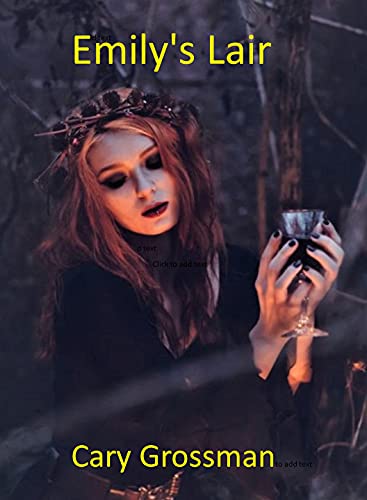
Dear readers, tonight with us is the owner of a local bookstore. Her knowledge of the Whitechapel murders and of Jack the Ripper bring her to the attention of the police. She is here to tell us about how investigating a current murder brought up a woman accused of witchcraft in the seventeenth century.
Tell us a little about yourself.
I’m Emily, the proud owner of Emily’s Lair, a private, non-corporate bookshop in New Vernon, Connecticut, with a wonderful variety of books. There’s an entire wall dedicated to classic literature, for example, sections on art, exploration, science, history, ancient civilizations, even true crime. You can get the latest releases, of course, but most of the shop is made up of books that I find interesting and think other people will too. I’m especially proud of the special section in back that’s filled with books on the European witch hunts. It also features more than one biography on the woman responsible for singlehandedly ending the witch hunts, Liesbeth Jansson.
Liesbeth Jansson? Who was she?
She was a woman from Breda, a city in the Netherlands. She got married to a professor from Leiden, a city that became a beacon of the Enlightenment. He died when the Plague swept through Leiden, and because Liesbeth was smart and strong-willed and refused to conform to what citizens at the time considered to be a “proper Christian woman,” she became a target. At that time, women who were different, or, especially, who weren’t submissive to men, were often accused of witchcraft.
Was Liesbeth Jansson accused of witchcraft?
Oh yes. But she fought back. You see, none of the women accused of witchcraft—the accused were almost always women—were actually witches. Many were elderly spinsters, midwives, or rich widows like Liesbeth. If you had money, you were a prime target because a witch’s money was always seized by the state, and witch hunters loved money. But with Liesbeth they had stumbled on someone they never expected to encounter—a woman with real power. She escaped, hunted down each of her accusers, and killed them in a very public and brutal manner. Once people realized there was a chance that they might accuse a woman who could fight back, the witch hunts ended.
What can you tell us about your latest adventure?
I met Will, a homicide detective. I fell for him right away despite that he was questioning me. You see, I was a person of interest in a murder that Will was investigating because I had once dated the man who was killed. Will came in the shop to ask me some questions; that’s how we met.
Continue reading “Emily Kostova (of Emily’s Lair, by Cary Grossman)”






 The Protagonist Speaks
Recent Comments