Search

The Protagonist Speaks

Interviews with the characters of your favourite books

Tag

Indie Author

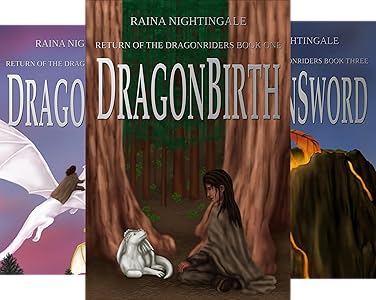
Silmavalien and Noren (of Return of the Dragonriders trilogy, by Raina Nightingale)

Dear readers, tonight with us are two dragon riders from a world where dragons are considered demons and Dragonriders are hunted and killed as witches.


I’ve heard the two of you are from one of the mountain villages. Can you tell us what it was like to grow up there? How are the people different in the mountains?

Noren opens his mouth, but then Silmavalien leans forward, and he gestures for her to start.

“I don’t know a lot about how the people are different,” she explains. “I really haven’t met a lot of people down here. But I can tell you a bit about how I grew up.”

She reaches out and takes Noren’s hand, and he smiles. She goes on. “The mountains are beautiful! I love them so much better than the plains! The trees, and the heights rising above you, and the valleys!

“As for growing up … My life was a lot like everyone else’s in Treas. My father was a good hunter, and when he taught my older brother, I often watched when I could. Noren was learning the same skills from his father, and he noticed and started going out of his way to help me and teach me how to do all the things he was learning. We spent a lot of time talking, and he told him all about everything. His frustrations, and his triumphs, and his first deer.” She smiles. “Everyone knew what was going on, of course, but most people didn’t take much notice. I’m not the only woman to hunt, but there aren’t that many of us. So people mostly ignored it.”

Noren grips her hand a little tighter. Perhaps he can tell she really has no idea where the plains-city people are coming from, and is just going on about her life. She turns to look at him.

“Sil, love,” he says, “I think this kind young man has no idea what you are talking about.”

She laughs a little nervously. “You go on, then, since you know more than I do.”

She leans into Noren, as he takes up the thread. “You asked how people are different in the mountains,” he begins. “In case you were wondering, dragons are just as maligned there as here in the plains and the cities. The bards often came through with their stories about them, the same ones you know I’m sure, and we didn’t have any stories of good dragons, either.

“Apart from that, I’m not sure where to begin either. I can only tell you that when I came down here, it was very confusing, and it took a while for me to stop doing things that made other people uncomfortable or suspicious that I had bad intentions. It was a very different environment in Treas, where everyone knows everyone else at least a little, than it is in the cities, where you’re living so close to so many people you don’t know at all, or even the towns down here, where travelers come through all the time. There, the only travelers we knew were bards, apart from every now and then, when we would host another village or two for a big festival.

“So there’s a kind of trust between us you don’t have in the cities. It’s not perfect, Silmavalien didn’t get to telling you, but her brother married a woman who was … well, the sort of person who’d lead the ‘Dragonriders are witches, burn them!’ mentality, and she was a nuisance to be around. But people’s relationships are clearer and we’re not worried about each other doing things that I don’t know how to mention.

“At first I really didn’t appreciate the different environment down here, and even now after spending a number of years working as low-priority courier, I still don’t. I just know better what to avoid, and being a courier helped. There were ways it narrowed and defined my interactions and made that easier. So I hope that’s … kind of what you were asking.”

Yes, it is. It was good to hear what both of you shared, and I think this is a question you might like, Silmavalien. What did you enjoy about your life growing up?

Silmavalien looks up and smiles. “Apart from Noren? We’ve always done so much together, since I was old enough to run and talk. Umm … probably what I miss most is the festival nights, especially the singing.”

Her voice takes on a cautious, wistful edge. “Now you mention it, I used to look forward to the bards. I loved the stories. But now … now that I know they’re all horrible lies, it’s hard to remember that well.”

She pauses, and the smile comes back. “But festival nights! I liked listening to the songs, and I liked to sing, sometimes together with other people, but I used to sing for everyone, sometimes our old songs that we keep, that I’d learned from hearing others sing, but I’d often sing alone, maybe a new song or one I made, or one of the old songs that’s for just one woman to sing. I loved all of it, and now, well, I wouldn’t give anything for the dragons, and Songeth often sings with me or for me, and I sing for them, too. So it might be even better, but it isn’t the same.”

Continue reading “Silmavalien and Noren (of Return of the Dragonriders trilogy, by Raina Nightingale)”

Katrina (Cat) Mancini (of Life and Death on Mars, by Edward M. Lerner)

Dear readers, tonight with us is an astronaut, speaking about the second cold war in the near future and the race to Mars between the US, China, and assorted billionaires.


Tell us a little about where you grew up. What was it like there?

I was an Army brat, so you name it. A half dozen places in the US. All across Europe. Once Japan and twice Australia. I can mispronounce words and mangle syntax in five languages. Apparently I speak French and German like an Alsatian, which is an insult from both sides. Ask me if I care.

Anyway, the first few moves taught me not to get too attached to places – or to people. Don’t take that to mean I’m some kind of loner, because I also learned to make friends quickly. Having friends around the world? That’s seriously cool.

As odd as the lifestyle seems to most folks, it’s what I knew. Straight out of high school, I enlisted. Already then I’d had my eye on going to space, and any of the services would pay for an engineering degree. Becoming a pilot was the logical first step and the Air Force, by far, has the most pilots of all the service branches. You don’t want to know how Dad took it when I joined the Air Force. He coped better with the move to NASA.

What do you do now?

Commander of NASA’s international Ares mission to Mars. Pilot of Meriwether Lewis, one of the mission’s pair of spacecraft. The second ship, of course, is the William Clark.

Anyway, that’s what I did until … well, best I not say.

What can you tell us about your latest adventure?

Only insane people would think to throw together a crewed mission to Mars in less than two years. Those, unfortunately, are the people I work for. After President Wu announced a mission to Mars, no way was our president willing to let China get there first.

Speaking of lunatics, well, then there’s my unofficial overseer. More than anyone, Xander Hopkins was the architect of our mad dash. It serves Xander right that the prez plunked him into my crew to be her eyes and ears. Even if – eventually – he became a good friend.

What did you first think when you got to Mars?

Technically speaking, I didn’t. I got us safely to its moon Phobos. From Phobos, we dispatched an armada of robots to explore the world below. Because to actually set boot on Mars would have massively compounded the challenges – challenges which the other guys discovered all too soon.

At way less than one light-second’s round-trip comm lag with the surface we had real-time control of all those bots. We could, and did, cover lots of ground. Drilled lots of exploratory holes. Flew everything interesting up to our Phobos base for closer examination.

You know what? Forget the party line that from Phobos we were responsibly searching for Martian life. That we posed no risk of contaminating it – if it was even there – with earthly microbes. I wish to God we could’ve flown those last few thousand miles. Instead, we had Mars ever overhead. Like a mottled red dinner plate hanging in the sky. Looming. Taunting.

What was the scariest thing in your adventures?

Setting aside That Which Cannot be Revealed Without Spoilers, there’s still much to choose from. I’ll go with the landing on Phobos because landing is such misnomer. Phobos is basically a potato-shaped rock. Its longest axis is scarcely 16 miles. A rock that small has no gravity to speak of. You don’t actually land there. You very carefully dock with it – only there’s no docking mechanism to engage.

What you do is, you harpoon the damned potato, then slowly reel yourself to the surface. No one knew for certain till we arrived that’d this could even work. Would harpoons bounce off? Would their impacts spatter us with rocky debris? What if any of our tether reels froze at the last moment? What if tethers tangled? Coming down askew, not squarely on our landing feet, could’ve bashed in something critical and stranded us.

Surrendering control to a damned computer and glorified garden-hose reels is no pilot’s notion of a good idea. Scary as hell, in fact. Not that, in front of crew, I ever said any of that. But, okay, in the end, the landing worked as planned. We did get down in one piece.

What was the worst thing about living on a spaceship?

Had you asked me about any previous mission, I’d have said the crowding. Spaceflight is like a bunch of people living together in a closet. Or maybe I’d have said the smell, for pretty much the same reason. But those previous flights were to Earth orbit, or lunar orbit, or to the Moon itself – in every case, for just a few days.

The flight to Mars took six months! You can’t help but get used to the crowding. It’s that or go psycho. You can’t help but become immune to the stench. Which leaves … the people themselves. You can’t get away from them – or them from you. You can’t not get on one another’s nerves from time to time. Sure, the psychologists had had their say. They’d declared us compatible. As if they had any clue what it’s like.

Aboard Lewis with me were the aforementioned Xander, the mad genius behind our crazy mission plan, and the uptight Canadian flight surgeon, Sonny Ying. We were at times, despite our best efforts, like cats and dogs. Or maybe oil and matches. And utterly dependent on one another.

What is the best thing about it?

As it turns out, Sonny. She and I developed … a thing. Which, I’d hafta guess, became the worst part about the flight for Xander. There’s not a lot of privacy in a closet.

Whom (or what) do you really hate?

Xenophobe paranoid nutcases. They don’t want us to go home! In the name of protecting Earth from some imaginary Martian plague, the so-called Planetary Protection League is already a sort of plague on Earth. Damned Luddites.


Edward M. Lerner worked in high tech and aerospace for thirty years, as everything from engineer to senior vice president, for much of that time writing science fiction as his hobby. He is the author of sixteen SF novels (five of them collaborations with Larry Niven) and dozens of shorter works. His 2015 novel InterstellarNet: Enigma won the inaugural Canopus Award for fiction “honoring excellence in interstellar writing,” while other of his works have been nominated for Locus, Prometheus, and Hugo awards. He also writes popular science, notably including Trope-ing the Light Fantastic: The Science Behind the Fiction.

You can find Cat on the pages of Life and Death on Mars.

Browse our archives for past interviews, or follow the site by email (bottom-right) to know immediately when your new best-book-friend makes an appearance.

Joss, aka Daxx (of New Rock New Role, by Richard Sparks)

Dear readers, tonight with us is an author and gamer who woke up as his alter-ego in his own fantasy books.


Tell us a little about where you grew up. What was it like there?

A small house on the edge of a village outside Cheltenham in the west of England. Beyond the garden fence were woods and hills that we could run wild in, barefoot in the summer, padded up against the cold in winter.  Up the lane towards the top of the hill was a dark, muddy pond we called The Giant’s Bath.  And beyond that, through the trees, lay the open sky and the far horizon.

Did you have any favourite toys as a child? Any cherished memories?

A medieval fort I played with for hours. A small railway set. Little animals and characters I staged elaborate stories around. Books that I lost myself in. Tales of gods and heroes, sagas, eddas, adventures in this world and a hundred others, from the Odyssey of Homer to Narnia and back again, via the Ramayana, Middle Earth and Outer Space.

What do you do now?

I was, until this all happened, a widowed, retired schoolteacher living quietly by myself in my little bungalow not five miles from where I was born.  There, I spent my time online, in my favourite MMORPG, running my avatar, an apex-level battlemage/healer, Daxx.

What can you tell us about your latest adventure?

It all began when we won the World Championship of Sword and Sorcery, with tens of millions watching live online.  The others in my crew are Grell, the Orc avatar of an Australian guy, and Qrysta, the dual-wielding, sword-dancing avatar of an Asian American girl.  We only went and won the title.  World Champions!

After which, everything went very weird indeed.  I found myself all alone, in the middle of an untouched wilderness, armed with only a crappy, noob-level sword and shield.  And I was no longer Joss, but my own avatar, Daxx.  For real.  There was no sign of Qrysta or Grell.  And I could hear wolves heading my way.  If I was going to find out what had happened, and why, first I needed to survive.

Bad enough, you might think.  It very soon got worse.  Captured by two wiry little Woods Kin archers, I was marched off to be sold at auction as an outlaw.  And soon found myself drafted into a local lord’s army, being trained up by the fearsome Serjeant-at-Arms Jack Blunt—known to one and all as Serjeant Bastard.

It was some time before our quest revealed itself—a quest that meant going on the run with a noble maiden searching for her mysterious godmother, and learning of a foe far more dangerous, and powerful, than any I had faced before.

Continue reading “Joss, aka Daxx (of New Rock New Role, by Richard Sparks)”

Rhona “The Heretic” Hunter (of How I Survived the Cthulhu Apocalypse, by Richard Weber)

Dear readers, tonight with us is a young woman who bore witness to a series of cataclysmic cosmic events. She speaks about facing vicious abominations, droves of those who have become mere husks of their former selves, and a dangerous cult bent on sacrificing our world to The Great Old One.


Tell us a little about where you grew up. What was it like there?

Atlanta. It was like any other big city, full of opportunities and barriers to those opportunities. Leaving there for Lexington, during what we now call the Cthulhu Apocalypse, was bittersweet. It was my home.

Did you have any favourite toys as a child? Any cherished memories?

My telescope. I was an astronomy nerd from the get-go. I learned at an early age (about 10 or 11) how small the Earth was compared to the vastness of the cosmos.

My most vivid memory is spending summer vacations at Lake Allatoona with my parents. I’m an only child but was allowed to explore on my own. One summer, I discovered a hidden door in the cabin we were staying at. It was in the empty bedroom where we stored our luggage. It was a small door under the staircase that ran up to the loft on the other side of the wall. I went inside and discovered a small library of books stacked up in a pile and covered with dust. All were books by H.P. Lovecraft. I took them all and read them the rest of the vacation. I owned them up until the events in 2028 that changed the world forever.

What do you do now?

I kill Lovecraftian monstrosities, and eventually (hopefully), Cthulhu himself. I also am a co-General for The Elder Sign Army – working with Generals Ben “The Nameless One” Walker, Frank “The Lawman” Hodges, Roger “Dirge” Young, and Gail “Star” Simpson – to organize a resistance against The High Priest and his Cosmic Church of the World Eater; fend off the aforementioned monstrosities; and am preparing to take a stand against Cthulhu upon his arrival at Red River Gorge in the coming weeks.

Continue reading “Rhona “The Heretic” Hunter (of How I Survived the Cthulhu Apocalypse, by Richard Weber)”

Ayela and Kamille (of The Kult of Salom’Sileyum, by Zachael T J Presgrove)

Dear readers, tonight we bring you the transcript of a live interview with two characters from a fantasy world not our own. They are here to talk about an attack from an ancient god, a government determined to cover it up, and a heartbroken elfan maiden certain to find answers, as they embark on a journey of mystery, terror, strange magic, and cosmic powers.


Host: Good afternoon Kamille and Ayela- or should we call you Tsana [Teh-Shaun-uh]?

Ayela: No, please; Ayela is fine. It’s the name I’ve always answered to and known.

Host: Very well, then, Ayela- I have to say, you have a lovely accent! Where did you say you came from again?

Ayela: Well, I was born in a country called Songriveii on my world, but when I was just a baby, I was kidnapped and taken to an orphanage. I don’t really know who did it or why, but that’s how I ended up in the northern part of the Empire of Enthedrill. My accent comes from there.

Host: Gotcha! On earth, we have a country called France. Your accent seounds very similar to that- anyways, I’m getting off track. Welcome to Protagonist Speaks, where we sit down with the very people at the center of stories all across the vast universes of- well, of reality! We prepare a list of questions so our audiences can get to know you better!

Ayela: It’s a pleasure to be here- also, how did you manage to get that portal open to get us here-

Host: That’s not important- anyways, I’m joined here with Ayela Rhexa, a beautiful crimson-haired elvish woman from the world of Thaerv, and her best friend, Kamille Lameen, another gorgeous Korokian elf from the same world! They’ve been through so much as members of the secretive hacktivist group called ‘The Darklings’-

Kamille: Let’s not start announcing-

Host: daring to battle the third-rail capitalist regime that set their world ablaze in war; the Empire of Enthedrill. And even more: they’re doing so without spilling a drop of elvish blood-

Ayela: there’s no need to share our methods-

Host: Let’s give them a warm round of applause!

Crowd: [Applause]

Host: Now, before we begin, I know there are concerns about the things you answer being aired on television in your world. I want to reassure you that we do not have connections to any of the worlds we retrieve guests from. The only television networks we broadcast on are the ones here in our own universe on earth. You can rest assured your confidentiality will be utterly honored.

Kamille: I have so many bloody questions.

Host: And so do we! Kamille, I hear an accent in your voice as well, though a bit more British. Are you not from the same area where Ayela gew up?

Kamille: No, actually. I was born in eastern Enthedrill, in a city called D’Vnora [Div-Nor-Uh]. My family and I lived in the lower half of the hold, called the undercity. It’s rife with poverty and racism, and for elves of color like myself, law enforcement painted targets on our backs. Most of my family was slaughtered in a raid by the police.

Host: That’s… That’s horrible! I can’t imagine going through something like that! Is that why you joined the Darklings?

Kamille: We don’t join, per say. We’re recruited, and from there we can accept or decline. Our leader, a figure dubbed Ruat, has a way of getting a hold of us and letting us know that we’re in, and then we’re told who to talk to from there. The only one who came to us differently was Ayela, here.

Ayela: Yes, I was given a message that told me I was the last, and I went straight to Kamille without any prompting to do so.

Host: Fascinating. We’ll get back to all of that, but before we do, I want to touch a bit more on your upbringings. Ayela, let’s start with you. I know you explained you were orphaned, but let’s get a bit more into the details. From our intial interview, you explained that no one adopted you. You had to learn and study on your own, and when you were sixteen, after you graduated from primary, you applied for citizenship into Enthedrill, using the orphanage’s owner’s surname as your own?

Ayela: Yes. I watched most of the kids I grew up with get picked by families, but they were all ‘ivory elves,’ so they had a much easier time than I did.

Host: Ivory elves?

Ayela: Elves that look like you. Pale skin, gold or brown hair, blue or green eyes. I’m a Songrivan elf. Our country’s royal family is rumored to be a pure bloodline, meaning they’re inbred, so anyone with red hair, freckles, and purple eyes like mine are overlooked. They call us ‘blood elves’ as an insult.

Host: But your race isn’t the only reason you were overlooked, is it?

Ayela: …No, it’s not. I’m also something called a divine logician. I was born with telekinetic, telepathic, and reality warping abilities, and growing up, I struggled to control them when I had emotional outbursts. The Orphanage’s owner was the only one who looked after me, and he put me in dance classes at a young age.

Host: And when you got your citizenship, you had already learned three cultural arts of dancing?

Ayela: Correct. I also took on martial arts classes from a few different cultures, and advanced pretty far in those styles. All of this, of course, was to hone and control my powers.

Continue reading “Ayela and Kamille (of The Kult of Salom’Sileyum, by Zachael T J Presgrove)”

Amber Yu (of The Bonehead Resistance, by Narelle King)

Dear readers, tonight with us is an ordinary Australian citizen who found herself embroiled in extraordinary events. After her son is taken hostage, she must race from leafy suburbs to the dusty outback, confronting merciless soldiers and terrifying monsters.


Tell us a little about where you grew up. What was it like there?

I grew up in north-west Sydney. My parents have lived in the same small brick house in Eastwood since they immigrated from China, a couple of years before I was born.

They had this great backyard full of fruit trees. I used to climb the trees and make myself sick eating the fruit. My mother was always tearing her hair out trying to get me to do homework, but I just wanted to be outside.

A few years ago they sold half the backyard to a developer who owned a couple of properties next door. He whacked an apartment tower on them, so now they only have a small vege patch, and nothing grows well because it’s always shaded.

Did you have any favourite toys as a child? Any treasured memories?

I spent hours jumping on our trampoline. This was in the 90s, so there was no padding or safety nets or anything, if you weren’t careful you’d land on the springs or the metal bars. One of my cousins fractured her leg falling off it.

When I was a teenager my friends and I would lie on it and talk for hours.

What did you think when you saw the Boneheads for the first time?

I was in shock. Just that morning Adam and I had been laughing at the rumours about the PM working with monsters. We thought it was a joke.

And the Boneheads were terrifying. Those black pits they have for eyes – they’re like something out of a nightmare. I watched them gun people down in the street. I’ve seen a lot of death since then, but I don’t think I’ll ever stop having nightmares about that.

Continue reading “Amber Yu (of The Bonehead Resistance, by Narelle King)”

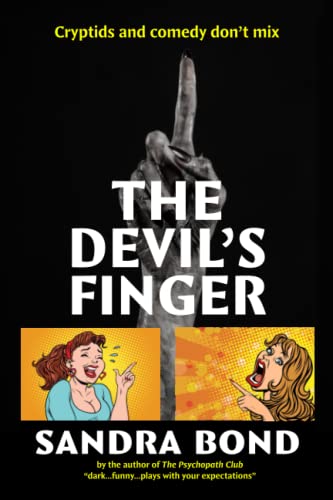
Liam Baxter (of The Devil’s Finger, by Sandra Bond)

Dear readers, tonight we bring you an alternative view point — that of the antagonist. He brings us a unique perspective on the world of stand-up comedy, and that of shapeshifting cryptids and catastrophes, and carpet warehouses that make for a witty supernatural thriller.


Tell us a little about where you grew up. What was it like there?

Born and brought up in the Thames Valley in southern England. I shan’t name the town, or I might turn this whole interview into a screed of hate for growing up in a small town when the big city is right on the horizon and you yearn for it but you’re too young.

Did you have any favourite toys as a child? Any cherished memories?

I had a ton of toys. In fairness, my folks were pretty decent; my dad had a good job at Heathrow Airport, my mum didn’t have to work, no brothers or sisters so I got all the attention. I’ve always liked attention. Whether that’s because my parents gave me so much, or whether my parents gave me so much because I craved it, I honestly don’t know. Anyway, I got into acting as a teen, and won a scholarship to drama school, which with my folks’ money was just enough to let me attend. Sadly, I soon found out that most actors and most people in entertainment are massive jerks, and often bent to boot.

Bent?

In every sense of the word. Don’t play the innocent! You know what I mean, mate.

I suppose I do. What do you do now?

You know that too, but I guess I’d better go into detail. I run TheStagedoorJohnny.com – the nonpareil website for British show biz gossip. When I finished drama school I knew I could never be a performer myself, but I’d made a good many contacts and I figured I could use them. And that’s what I’ve been doing all my adult life. Along with ancillary stuff like articles for the red-top tabloids, the odd hasty show biz biography, that kind of thing.

What can you tell us about your latest adventure?

I always have plenty of irons in the fire, but I guess you want to know what I’m prying into right now. Well, you know Jemima Charfield? The fat comedian, who was married to Chaz Singleton out of the Omega Mice? Yeah, her. She bust up with her manager pretty spectacularly not long ago. In public; Jemima’s as bad as Chaz for making public scenes. Her manager, Eddie, isn’t the kind to forgive, or give mercy fucks, but all of a sudden they’re best buddies again, and something stinks to high heaven. I want to know what’s going on, there. I’m convinced there’s a story for my site to be unearthed; a big story.

Continue reading “Liam Baxter (of The Devil’s Finger, by Sandra Bond)”

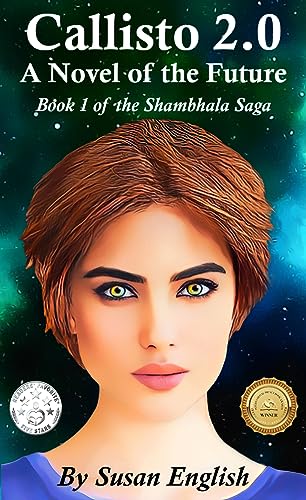
Liu Mei Xing (of Callisto 2.0, by Susan English)

Dear readers, joining us tonight is a filtration specialist from the future. She is here to tell us about life on the Shambhala space station, experimenting with exploding food and creating sustainable space cuisine as she navigates the challenges and wonders of living in microgravity.


Tell us a little about where you grew up. What was it like there?

I was born and raised in Shenzhen, China. I love the city’s mix of tradition and modernity. Living near the coast was fantastic. It was the best of both worlds, a vibrant city life and beautiful nature. I can still remember the smell of fresh produce and local treats at our local market, and the mountains and ocean are incredible.

Of course, Shenzhen has its challenges too, like social inequalities, which made me want to give back and make a difference. But it also has a rich cultural heritage with festivals and dances.

Growing up in such a diverse place made me curious and adaptable. Those traits have stuck with me and guided my journey, but my roots in Shenzhen keep me grounded and motivated.

Did you have any favourite toys as a child?

Oh, for sure! I had a few favorites. One was a Smart Origami Set, a gift from my parents. It combined the ancient art of paper folding with modern technology, and I was able to create these intricate, animated paper sculptures through an interactive app on my tablet. It sparked my creativity and got me hooked on my cultural traditions and technology!

I also had a collection of robotic pets. There was one in particular I absolutely adored. It was a robotic bird named Tian, which means sky in Chinese. I took it everywhere with me! Tian could sing, and we would even perform duets together. So much fun!

What are some of your cherished childhood memories?

I remember weekend family outings to the mountains. We’d get away from the busy city life and simply enjoy the great outdoors. My dad liked to teach me all about different plants and animals, and he made sure I appreciated the natural world. As you know, China, along with the rest of the world, was hit pretty hard by global climate change, and he wanted me to understand its impact, but also to see the real progress scientists are making in restoration efforts.

One of my most special memories was a trip with my grandparents to a local folk festival. I got to participate in a traditional dragon dance and even wore a piece of the dragon’s costume! The whole experience was so exciting and full of energy, with traditional music and vibrant colors, and it made me feel connected to my culture and community.

What do you do now?

My official role on the Shambhala Orbital Laboratory is Filtration Specialist, but my responsibilities have evolved since I first started with the Foundation. I also work with a colleague, Fae, on food production. Recently, we succeeded in creating a brand-new recipe which was a big hit with the crew! It felt like a major accomplishment to have a meal made entirely from food grown on Shambhala. Oh yeah, I sometimes organize karaoke sessions at our Friday night socials!

But working on Shambhala is not just a job for me; it’s a way of life. The philosophy of unconditional love and support that permeates our organization aligns perfectly with my own values. I feel truly grateful and honored to be part of the Foundation.

Continue reading “Liu Mei Xing (of Callisto 2.0, by Susan English)”

The cast of characters (of A Gryphon’s Tale, a web-serial by Jess Mahler)

header for a gryphon's tale. A mountain lion-harris hawk gryphon walking infront of mountains. Text: A Gryphon's Tale

Dear readers, tonight with us are Cesario, Lefeng (known to the others as the Trial-Parent), Marcus, and The Great Goddess out of Jess Mahler’s queer web-serial A Gryphon’s Tale. They are here for a party, crossing the various stories they appear in.


Tell us a little about where you grew up. What was it like there?

Cesario: The city of Messaline. I grew up with my father and brother. I think it was in Italy?

Parent of the Trial-Family: City-folks. How do you manage with never knowing where you are?

Cesario: Says the nomad.

Marcus: Gotta go with Trial-Parent on this. I know Shakespeare was light on detail, but if you don’t even know what country you grew up in, that’s not the best.

Cesario: And you know so much about your background?

Marcus: I sprung up full-grown, like Athena out of Zeus’ head.

Trial-Parent: (snorts) 

Marcus: But I was born in the US. A small-town kid with a love of comic books and a willingness to use my fists.

The Great Goddess: Some of us never were ‘kids.’

So you are all from different stories?

Trial-Parent: Yes. We’re part of a serial thing called A Gryphon’s Tale. It’s four to six serialized stories a year. Some stories are shorter and are told over a few months. Others are longer and broken into seasons.

Cesario: Wasn’t your story the first? And still going?

Trial-Parent: We were going to be a novel, but the author needed to try something different. It’s worked out pretty well.

Marcus: Not for all of us.

All: Epsilon.

The Great Goddess: It is a risk the author takes – posting stories as they are written. Some will never be finished.

Cesario: Epsilon was finished. Just… abruptly and not as intended. 

Epsilon? Trial-Parent? I’m confused

Trial-Parent: The culture of my story is such that names are private. One is known by nicknames by friends and distant family, and others use family names. My spice-to-be call me guarding-one and once-walker. I had been Near-Adult of LongStride, but LongStride is no more, destroyed in the great wave. My new family is not accepted by the city, so we are ‘Trial-Parent’ until we gain a true name.

The Great Goddess: A wise people, who know the power of names.

Marcus: Eh, I’m good with the power I get from a gun and a good team at my back.

Cesario: Epsilon is the shortened title for another story, Mighty Hero Force Epsilon. It didn’t work as the author expected, and they ended it early. A happy ending, but abrupt. I am grateful my own story was written in full before the author began working on it.

And who is the gryphon?

Trial-Parent: The author.

Cesario: It’s a bit of a conceit they enjoy. The image of a traditional storyteller with listeners gathered around enjoying the tales. Except the storyteller is a gryphon. They have long subscribed to the idea that monsters in stories represent those pushed to the edges of society. Different, rejected, disenfranchised. Frightening for those who hold power.

Marcus: Yup, and they lean into it. If society labels them a monster, they will be a monster – and tell stories reminding folks that the real monsters aren’t the ones driven into the shadows.

Continue reading “The cast of characters (of A Gryphon’s Tale, a web-serial by Jess Mahler)”

Blog at WordPress.com.

Up ↑