Search

The Protagonist Speaks

Interviews with the characters of your favourite books

Tag

Historical Fantasy

Belinda (of Dark Matter, by Deborah Ann Gordon)

Dear readers, tonight with us is an immortal training in an order dedicated to healing. When a beloved mortal falls deathly ill, she must travel back to her mortal origins in the sixth century to save him.


Tell us a little about where you grew up. What was it like there?

I don’t remember where I grew up. My past is a fog I can’t quite lift. I’ve tried to shape it, to grasp something solid, but the memories dissolve as I reach for them.

Michael found me wandering in Paris. He took me in, became my teacher and guardian. He said we were different. At first, I thought he meant we didn’t belong. Later, I learned he meant we were immortal.

He brought me to his chateau in France and trained me in the immortal arts. He told me we were part of a society called the Group of World Servers, devoted to healing human fear because it blocked their evolution and their capacity to accept us among them. We were not meant to take their pain away, but to minister to it so they could heal themselves.

But to return to your question: if I had a hometown, I don’t know its name. Whether there were trees or towers, winters or summers, all of it is lost to me. What I do know is that I didn’t just lose a home; I lost the story of where I began. That absence has shaped me more than any place could have.

And yet sometimes I dream of a woman with bright eyes and a voice that commands the wind. Her name rises like a forgotten incantation—Cerridwen. I don’t know if she is memory, myth, or the shadow of who I once was. But she walks with me, quiet and ancient, in the blood I carry.

Did you have any favourite toys as a child? Any cherished memories?

If I did, they’re gone. I sometimes believe I’m older than anyone knows—possibly centuries old. If there were toys, they might have been hand-carved, or stitched from scraps. Or maybe there were none at all.

Even if I once held something dear—a doll, a book, a worn blanket—I no longer remember the feel of it. And without memory, joy becomes something abstract. A shadow, shaped more by faith than experience.

The absence of memory is its own grief. A quiet, aching kind.

What do you do now?

I’m a healer. I once travelled with Michael to places torn by war and suffering. But I live in tension with the vows I took.

I have the power to fully heal—to stop death, erase pain, restore a body to wholeness—but I’m forbidden to use it. The rules say we can calm and comfort, but never intervene. Not even when a child lies dying in front of me.

I don’t believe I chose this life. Because if I had, I would have chosen differently. I argue with Michael. I push the limits. I carry guilt like it has been sewn into my skin.

Right now, I’m on a break while Michael travels in Europe. He left me with the Bensons in Coriander, New Hampshire. A mortal family. I’ve been attending high school and pretending to be eighteen forever.

They say our mission is to help humanity evolve on its own terms. But what use is power if you must keep it hidden? What kind of oath demands you let someone die when you could save them?

So what I do now is live in that space between obedience and defiance. I try to honour my role without losing my soul. And in quiet moments, I wonder who I might have been, if choice had been mine.

What can you tell us about your latest adventure?

I wouldn’t call it an adventure. It was a reckoning. A collapse. A return. And maybe a kind of resurrection.

I discovered I’m not just immortal. I’m something more—tied to an ancient prophecy that speaks of a child born to an immortal who might one day bridge the mortal and immortal worlds.

But none of it mattered when Damien fell ill.

Damien is mortal. Fierce and brilliant, stubborn and kind. He loved me for who I was, not for what I might become. When he grew sick, and the light began to leave his eyes, the world shrank to the pain of watching him fade.

Michael told me it was too late. That even my power couldn’t reach him. But I couldn’t accept that.

So he gave me an elixir and said I had to return to the moment I became immortal. Only there would I discover what Emila truly was. He would not explain further.

So I drank. I went back through time, through memory, and became my former self—Cerridwen, High Priestess of the Isle of the Mists.

I didn’t do it because I was chosen. I did it for Damien. Because loving him is the one thing I never doubted. And I would risk everything to save him.

Continue reading “Belinda (of Dark Matter, by Deborah Ann Gordon)”
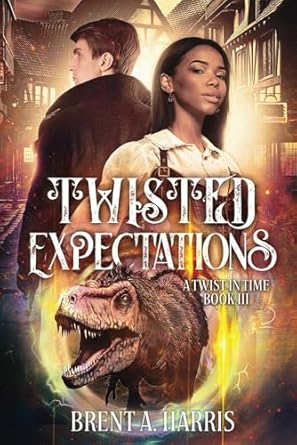
Philip Pirrup, aka Pip (of Twisted Expectations, by Brent A. Harris)

Dear readers, tonight with us is one of everyone’s favourite Dickens’ characters – talking about 19th century London, steam engines, time travel, and dinosaurs.


Tell us a little about where you grew up. What was it like there?

I grew up poor out on the Moors of Kent with my sister and her husband Joe Gargary, the local blacksmith and to whom I apprenticed under. I was raised by hand by my sister, and I do mean a mean one. Luckily, a generous benefactor intervened and sent me off to London to become a gentleman.

Did you have any favourite toys as a child? Any cherished memories?

I played at knaves with Uncle Joe, and we’d often race to see who could eat our buttered bread first each morning, and the times we’d work together at his forge, but I gave all that up when I was offered a chance to become a gentleman in London, a choice that I sometimes think back upon in regret.

What do you do now?

I am a gentleman of the city, you see. My duties are to my wealth and to my name. I’m seeking a parliamentary seat, and for that, I’ve called upon the London’s own vigilante, The Orphan, for his assistance. I wish to ally myself with him.

What can you tell us about your latest adventure?

Well, I should have known, chaps, that involving myself with Mr. Twist would inevitably wrap me up in one of his mad schemes to save the city when creatures – extinct creatures, mind you – arrive without invitation or provocation.

Continue reading “Philip Pirrup, aka Pip (of Twisted Expectations, by Brent A. Harris)”

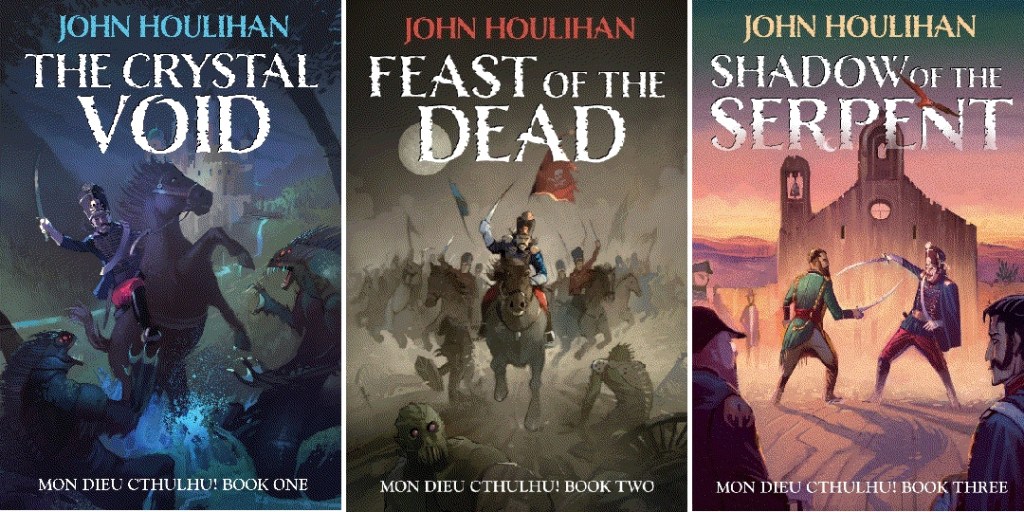
Felicity Brockenhurst (of the Mon Dieu, Cthulhu! series, by John Houlihan)

Dear readers, tonight with us is a British lady from the time of the Napoleonic wars, who — quite unlike other ladies — is one of Sir Arthur Wellesley’s renowned spies and assassins. Call her a love-interest at your peril, but we did interview the protagonist from these books before.


Tell us a little about where you grew up. What was it like there?

My name is Felicity Brockenhurst and I was born in British India in 1789. Sadly, my mother died giving birth to me, so I was raised by my father who provided me with the best private tutors, and an all around education which was quite unconventional for young ladies.

Did you have any favourite toys as a child? Any cherished memories?

Toys? No, there was very little time for such frivolities. My tender years were spent in training and preparation. Riding, hunting, fishing, shooting, handling all forms of weaponry like knives, guns, swords and even lances. I am quite fond of the custom pepperbox revolver my father gave me aged seven though.

What do you do now?

Well, normally I am not so indiscreet, but since you asked so nicely. By day, I am a… I suppose what you might call an operative, an instrument, one of Sir Arthur Wellesley’s most renowned spies and assassins. The French call La Rosignol, the Nightingale and have all manner of wild tales of my accomplishments. It is said I smuggled Trouvier out of the Bastille hidden beneath my skirts, liberated the plans for invading Iberia from a locked strongbox under the Empereur‘s bed, and even eliminated the unfortunate General Lanoir through the sheer vigour of my lovemaking…  Modesty forbids me telling you which of these contain more than a grain of truth.

What can you tell us about your latest adventure?

Ah, the affair of the Shadow of the Serpent? It is Gaston Dubois’ tale truly of course, that brave, foolish, hot-blooded chap. He’s an absolute clod sometimes, but a brave one and an undeniably handsome one with those moustaches and cadenettes. He is one whom I must confess, I have more than a trifling affection for.

In this tale from his memoirs, Dubois is drummed out of this beloved hussars over a foolish duel and sent in disgrace to the “Accursed 31st” Dragoons who he is charged with turning into a proper fighting force (accompanied by his loyal sergeant the redoubtable Bastien Sacleaux, of course). There he earns the enmity of the countryside and a local bandita by the name of La Espina, the Thorn, who seems determined to have this head. While it is a trying experience, it is also an instructive one, for it is during this epic travail and through the battles he fights, first against La Espina’s wiles and then against the Spanish army, that he first begins to learn the real truth behind the Eternal Struggle which governs the age of Napoleon. It is where he is first set on the path that will bring him into the light to become a Keeper of the Hidden Flame, as am I.

Continue reading “Felicity Brockenhurst (of the Mon Dieu, Cthulhu! series, by John Houlihan)”

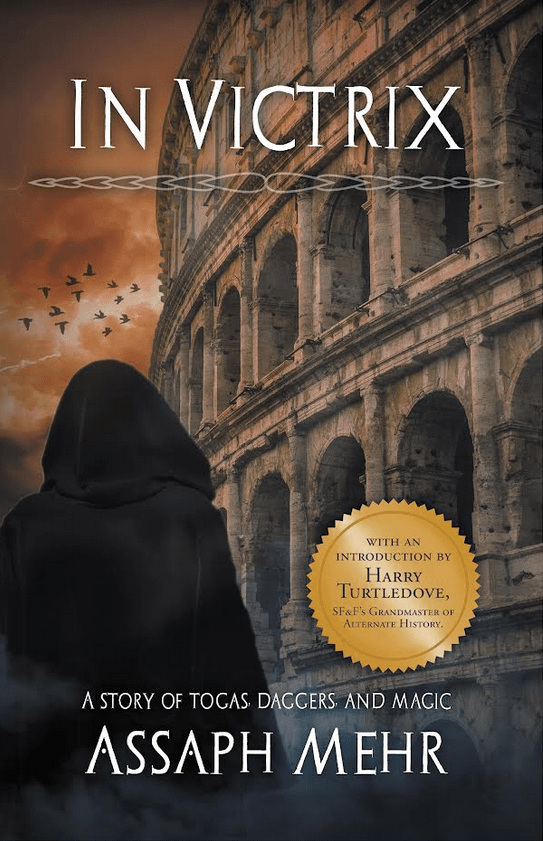
Borax (of In Victrix, by Assaph Mehr)

Dear readers, tonight with us is nominally the bodyguard of the protagonist — proving once again that everyone is the hero of their own story. He’s here to talk about gladiatorial games, about childhood in the forest vs life in the big city.


Tell us a little about where you grew up. What was it like there?

I grew up in the forests of Arbarica, under evergreen trees. We lived in a remote village, only a few families, and my father and brothers hunted for furs and meat. At festivals, we went to the oppidium to trade the furs for tools, jewellery, and other things, and then stayed the nights for celebrations. The bards sang, and the druids dispensed law and lore, enthralling everyone with feats of magic.

Did you have any favourite toys as a child? Any cherished memories?

All the memories I have are cherished because there are so few of them. I was barely thirteen when the legions came. I took up a sword and stood with everyone I ever knew and more besides against the invaders.
It didn’t help. I have no idea how I survived. I don’t even recall the actual battle. Then I was chained and marched day after day to Egretia. I was a big one, even as a child, so a lanista from a gladiator school bought me. That was the end of my childhood.

What do you do now?

My dominus is a kind master, and I owe him my life. Gladiators don’t always die on the sands and the retirement options are limited, often reduced to begging. What else is there for someone who only knows how to fight, but can no longer do it once he’s too scarred and disfigured? Even those who survive the six years or thirty bouts to earn their freedom, find it hard to get a job.
Felix took me in when I had no prospects, gave me this metal hand you see, and now I protect his life. I go wherever he goes, to make sure he comes back.

What can you tell us about your latest adventure?

You’d have to ask the master about that. My dominus is very strict about client confidentiality. Without betraying any names… well, I got to mix with gladiators again, and got a much better view of the chariot races. There were things going on — with secrets and gods, and sacrifices and religion, and rich people tampering with things they shouldn’t — and I have no idea what they meant. I wasn’t privy to those conversations. I was just there for when the going got rough.

When it did! Now, that is something that gets the blood roaring in your ears. Not like the adulation of the crowds in the arena, but real fights in dark corners with real stakes. Makes you appreciate being alive.

Continue reading “Borax (of In Victrix, by Assaph Mehr)”
Featured post

Valentin de Broceliande (of The Signet Ring, by Ellis L. Knox)

Dear readers, tonight with us is the leader of a wandering troupe of acrobats, dancers, singers, and performers of small wonders. In a misty forest and a bizarre twist of fate (or the gods), he ran into our own Felix. We faithfully reprint their conversation.


A cold night. Mist settles over the pine forest, obscuring the thin moon. Two men pass through each other.

“Whup,” one said. “I didn’t see you.”

“Nor I you,” the other said. “Not even as you walked through me.”

“Noticed that, did you?”

“Hard to miss.”

The first man held out his hand. The other reached out as well. Their hands met but did not touch.

“Even harder not to miss, seemingly.”

“This is strange upon strange,” the first man said. “, but we can be strange without being strangers. My name is Valentin de Broceliande.”

The second man raised an eyebrow. “You’re well-spoken for a barbarian.”

“I’m no barbarian, sir. As you see, I am not jabbering bar-bar-bar.”

“Heh. Fair enough. Valens Tine De Bro….”

“Call me Val.”

“I can manage that. My own name is Spurius Vulpius Felix, from here in Egretia.”

“The Lucky Fox?”

“Er, call me Felix, if you please. I like to think I depend more on skill than luck.” He cocked his head. “Your blond hair and blue eyes say you are from the north. What brings you so far south?”

“Magic, seemingly, for I am not so far south. Only in Suevia.”

Felix’s eyes widened. “But the Suevi dwell north of great mountains.”

Val nodded. “Indeed.”

“This has to be some sort of sorcery,” Felix declared, “though I’m not sure to what purpose.”

“Or it’s the work of the gods, and therefore has no sensible purpose at all.”

Felix chuckled again. “We seem to have a similar temperament, friend. Come, let us sit and see what we can puzzle out from this puzzle.”

“It’s a cold night, but this is worth a talk,” Val agreed. “I’ll sit here on this stump.”

“And I on my bench here. You will not be surprised to hear that to me you too are sitting on a bench.”

“No, on a stump,” Val said. “Just as you are.”

They shared another chuckle.

“Tell me, Val,” Felix said, “what brings you to this place … wherever it is?”

“We travel further north, looking for work.”

“We?”

“The Compagnie des Trouvères, a performing group.”

“Ah. You are an actor?”

“Director. I’m the padron of our little troupe. We do plays, but we are also acrobats, dancers, singers, and performers of small wonders.” He paused. “And yourself?”

“I am,” Felix hesitated a little, “an independent investigator.”

“That’s a curious title.”

“It’s an occupation more than a title. I look into … well … wonders both large and small. For a fee.”

“Oh, I see. I’ve done a little of that myself, though not always intentionally.”

“How so?”

“The Trouvères were indeed south not so long ago. On Capreae we recovered a valuable ring for the Duke of Calabria, for which we were paid.”

Continue reading “Valentin de Broceliande (of The Signet Ring, by Ellis L. Knox)”

Captain Phileas Nemo (of The Lone Captain, by Lewis Crow)

Dear readers, tonight with us is a submarine‘s captain – the son of the most famous captain the Victorian-era has ever seen. He’s here to talk to us about exploring shipwrecks, aiding the oppressed, and supporting freedom fighters, abnd about the fragile international balance of power.


Tell us a little about where you grew up. What was it like there?

I was the son of a wealthy Polish count, and my life certainly had its advantages.  I received a rigorous and thorough education in Warsaw, both at schools and from Papa.  My family traveled across Europe and hosted many social functions at home.  But despite our wealth, Papa always showed concern for the less fortunate.  He never let me and my sister forget how blessed we were, and he was a champion of the downtrodden.

Did you have any favourite toys as a child? Any cherished memories?

Papa was an engineer, and he actually made some of my toys himself.  I loved spending time with him.  My favourite moments were when he and I created simple toy boats out of wood, paper, and paint.  In general, I just enjoyed being together as a family, whatever we did.  I thought our happy life would never end—until the rebellion started and the Russians destroyed us.

What do you do now?

I am captain of the NAUTILUS, the magnificent submarine Papa built and sailed in for many years.  My crew and I explore the oceans to further man’s scientific knowledge of them.  We also gather wealth from sunken treasure ships of old and use it to help finance independence movements around the world.  The oppressed find allies in us.  Some of my activities draw (unwanted) attention from the nations, particularly Britain and America.  We are no threat to them, so they should let us be.

What can you tell us about your latest adventure?

In the last couple of years, we have been significantly involved in a certain island nation’s fight for independence.  We made a bit of military history in the process, I might add.  After that, circumstances forced us to take on the task of confronting a dangerous man in an even more dangerous ship who was trying to bring a mighty nation to its knees.  If a powerful country can be so threatened, what hope would the poor and defenseless have against such an adversary?

Continue reading “Captain Phileas Nemo (of The Lone Captain, by Lewis Crow)”

Lieutenant Colonel Gaston d’Bois (of Mon Dieu Cthulhu! by John Houlihan)

Dear readers, tonight with us is a French Hussar from the Napoleonic Wars, who found out that there are worse horrors than facing Wellington in battle. He’s here to tell, in his charmingly French way of speaking, about his adventures.


Tell us a little about where you grew up. What was it like there?

D’Bois is a child of the forest, and was most fortunate to grow up in the Ardennes and even luckier that it was the French rather than the Belgian part, non, or Lieutenant Colonel Gaston d’Bois (retired) would be a different man entirely!  Mon Dieu, you could not wish for a more idyllic playground, the wooded glades were my play pen, the trees my climbing frame, the birds and the beasts my teachers, and d’Bois learned many of the most important lessons in life underneath that idyllic canopy.

Did you have any cherished childhood memories?

D’Bois was born to be an hussar, a formidable rider, swordsmen, crack shot and lover, although he is equally a most ‘umble and modest man. Yet it was almost before he could walk that he began his lifelong love affair with the cheval—the ‘orse as I believe you Anglais types term them.  D’Bois took to the saddle like he was born there and his père schooled him in the virtues of ‘unting, shooting and swordplay, so he was perfectly prepared for the horse soldier’s life which destiny had chosen for him.

What do you do now?

Alas, d’Bois is long in his dotage now, but the fire still burns, even if it produces more smoke than flame nowadays! Mais, but he is passing the time, in between pursing the delightful if ever elusive widow, by recounting his adventures in Napoleon’s grand armee to a journaliste Anglaise. Normally, these are the most despicable of low life types, who d’Bois would not hesitate to horsewhip on sight. Yet this one seems a decent fellow, enraptured by the many strange occult adventures that befell d’Bois during his time in Napoleon’s armee, as well as being most liberal with the cognac.

Continue reading “Lieutenant Colonel Gaston d’Bois (of Mon Dieu Cthulhu! by John Houlihan)”

Elias Wilder (of Half a Soul, by Olivia Atwater)

Dear readers, tonight with me is the Lord Sorcier of Regency England. Most people find him handsome, strange, and utterly uncouth—but gossip says that he regularly performs three impossible things before breakfast. We’re here to find out the truth.


“Lord Sorcier” is a French title, isn’t it? How does one go about becoming the Lord Sorcier of England?

It wasn’t my choice, thank you very much. The Prince Regent suggested it, for some mad reason. He thought it was fitting, given that I supposedly defeated Napoleon’s Lord Sorcier in an epic magical duel.

…Supposedly?

You should really exercise more scepticism in your daily life. The ton also believes that I do three impossible things before breakfast every morning.

Three impossible things! Who has time for that sort of nonsense? I limit myself to two impossible things per day, at best.

You spent at least some of your life in the workhouses. What were they like?

I see you have indeed been listening to idle gossip. I would be happy to answer your inquiry in lengthy detail—in fact, I have described the hideous conditions of the workhouses to the House of Lords on more than one occasion. I am sure you could find a record of it. Would you like to hear about the lice, the influenza, or the boy who had his hand cut off from gangrene? I could go into the rampant abuse, the lack of food, or the constant, awful smell—

Er, how fascinating! We really must move on, I’m afraid, since we haven’t that much time.

I somehow suspected as much.

And what are the duties of the Lord Sorcier of England?

Primarily, I am told, I am supposed to defend King and country against black magic of all sorts. In practice, there is little black magic to be found, and I must say, I grow tired of noble ladies insisting that their larder has been looted by faeries.

Continue reading “Elias Wilder (of Half a Soul, by Olivia Atwater)”

Thal Lesky (of Werewolves in the Renaissance, by Tracy Falbe)

Dear readers, tonight with us is a werewolf, stalking the streets of 16th century Prague. He is here to tell us about witches and sorcerers, and about a world that denies its pagan roots.


Tell us a little about where you grew up. What was it like there?

My youth, or my first life as I like to think of it, is not easily recalled. I have flashes of memory since I emerged from the forest. The potions and spells that gave me the wolf life in the forest wiped away my clear recollection of childhood. Or perhaps the ageless decades that I spent in wolf form gradually consumed memories of my early years.

Now that you know better my troubles, I can say that I came to live with my mother on the outskirts of Prague as a young lad. My mother was a midwife and much disparaged by some quarters of society although relied upon by a trusting clientele. Our life on the fringe of society made me an outcast.

I think that motivated me to seek out my father for he could work the magic that would take me away from the human world. He gave me potion and chanted over me in a secret forest grove.

I became a wolf and lived wild in the forest. Always was I an alpha. I knew mates and sired pups. When the wolves of Central Europe howl, I hear my kin.

All of those years are precious to me. Part of me will always be the beast of the woods.

Do you have any important possessions?

I must admit that my wolf hide is precious to me. When my mother cast the spell of werewolf making, it drew me out of the wolf body and left me as a man. But the magic wolf fur remained at my side. When I recite the spell written on the skin, I become the werewolf.

Aside from my fur that I carry with me always, I do love my two pistols. The first one I won in a game of cards from a Bohemian Captain. His rage at that loss caused much misery for the Gypsies whose company I was keeping at the time, which I regret. My second pistol I obtained from a gunsmith in Prague.

Why did your mother cast a spell that made you a werewolf?

The werewolf spell was her last desperate act before witch hunters caught her. They burned her at the stake, but her magic summoned me to avenge her. Her magic compelled me to do some terrible things, but she had her justice in the end.

The folk now call me the Butcher of Prague for what I did.

What can you tell us about your latest adventure?

I’ve reunited with my father, Sarputeen. He gave me shelter after I fled Prague. We’ve decided to make war, such as we can, against an old rival of his. He is a perilous sorcerer named Tekax, who empowered the Ottoman armies.

When Tekax learned that I had returned to the world of men as a werewolf, he wanted to strike a blow against my father. And so Tekax sent assassins to kill me. He worked dark magic to make a creature called a fext. This fext began as a man, a skilled warrior, but now…he cannot be killed.

His body expels bullets and heals. If he is cut, his skin closes and makes the flesh whole again. We hope to defeat him by cutting him into pieces and burning them.

Continue reading “Thal Lesky (of Werewolves in the Renaissance, by Tracy Falbe)”

Blog at WordPress.com.

Up ↑