Search

The Protagonist Speaks

Interviews with the characters of your favourite books

Category

Interview

Jordan McClellan (of Of Saints and Rivers, by Jim Logan)

Dear readers, tonight with us is a man who grew up in the shadow of his celebrated father and brother, more into books than farmwork or sports. He’s here to talk about his past across the Caribbean, a small Mexican village, prison, and seminary, and his continual search for meaning.


Tell us a little about where you grew up. What was it like there?

Born the youngest of three children in the early 1900s, I grew up on a farm and ranch along the Canadian River in western Oklahoma. Early Oklahoma was in many ways a paradox—beckoning but brutal, innocent yet unforgiving, offering up both hope and hardship. Wind and weather tumbled across the region, shaping the land and people. For every dream fulfilled, another died. But it was also a place of profound connection to the land, a lingering frontier togetherness, and a trademark grit and capacity to endure. You could smell the earth and hear its voices. It was a place of wide-open skies and endless horizons; of the immense sweep and quiet stillness of prairie, with a stark beauty all its own; a place worth loving.

What do you do now?

At the novel’s end, nearly one year ago, I was planning to ask Jenny Burns to marry me. Happily, she said yes, and we learned a few days ago that we’re going to be parents in around six more months. I’ve been working on a second novel—this one about western Oklahoma and its early settlers. We’ve been building a new home on the property and hope to be moved in by the time the baby comes. It’s an exciting time.

What was the scariest thing in your adventures?

The prison attack by Kushman and moments following were probably the most terrifying of my life. While I never glimpsed his face until it ended, I knew almost immediately who it was—and the deep voice left no doubt. I was acutely aware in that moment that my worst fear was about to be realized—and my broken nose and the bleeding and feeling of being strangled and suffocated only made it worse. I’ll be forever thankful to Oscar Tasanko for the knife. I never want to experience such a thing again.

What is the worst thing about being in prison?

The worst thing about spending time in the Oklahoma State Penitentiary at McAlester was that the place was a dehumanizing abomination. “Big Mac” housed around three thousand inmates in 1941—crammed into living spaces meant for half that many. The inmate population teemed with an assortment of thieves, forgers, bank robbers, rapists and murderers—some of which were feeble-minded, insane, drug-addicted, or sexually deviant.

My cellmate and I shared a space of eight-by-ten feet, with an eight-foot ceiling—stale, dank, choked off from fresh air or sunlight. We slept within inches of a cell toilet. A breeding ground for vermin and disease, the place reeked of disinfectant, and twice-weekly showers ran either too hot or cold. Prisons, from the beginning, have been places without forgiveness, where our unwashed masses, cast aside by an imperfect system, waver between hope and despair.

What is the best thing about it?

If there was a “silver lining” to prison life, it was that you had a lot of time to think—to ponder some of the deeper questions of what it means to be alive. I also gained an appreciation for small things I’d never noticed before—the freedom of a bird in flight; the beauty of a dandelion; the wonder of a butterfly.

Tell us a little about your friends.

I’ll discuss two I became close to—and two people couldn’t be more opposite. I met Oscar Tasanko in prison. A gentle giant of a man, Oscar stood nearly seven feet, was full-blood Kiowa, and was serving time for assaulting two police officers he felt had mistreated his mother. Oscar had a somewhat grotesque physical appearance, with severe acne, several missing front teeth, and a gaping cleft palate—untreated from birth—that bisected his upper lip. He’d grown up being mocked by strangers as a freak. We’d become friends after I’d remarked on a beautiful picture of his mother he carried in his wallet. He kept to himself, and we often visited during breaks in the prison exercise yard. While most regarded him as having little mental capacity, I knew better—I found him to be wary and slow to speak—but observant and intelligent. He was a loyal friend—and there came a time when I owed my life to him.

Sister Maria was an older, Catholic nun of legendary renown who lived alone in the mountain foothills, on the Mexican side of the Rio Grande. Revered for her miraculous healings and kindness to those in need, she was known to most as Angel del Rio—the “Angel of the River.” I came to know her when I volunteered my help for a few months after her assistant was injured. She was amazingly well-read, and our evening-supper discussions and debates were memorable. One evening she told me the story of how she became a nun—along with that of a secret, long-ago love she’d shared with only a few. Her story eventually became a novel that changed my life.

Any romantic involvement?

I was deeply in love with two women in my life. Since both are discussed in vivid detail in the novel—I’ll say no more.

Whom (or what) do you really hate?

While “hate” is a word I try to avoid, my sister Becky’s high school coach and first husband, Benny Taylor is someone I grew to detest. I have trouble understanding how such a successful coach could be such a loser as husband and father. He cheated on my sister, abused her, skimped on child support, and never showed at his daughter’s wedding. Benny was driven by two great obsessions in his life—winning and seducing young women. Our family learned a valuable lesson from him.

Can you share a secret with us, which you’ve never told anyone else?

Much in the novel was loosely based on my family’s history, and many of Jordan’s reflections mirrored my own. He was fifteen years old when his father hit him—I was fourteen. The circumstances were much the same—I said something in disagreement with my own father—when I probably shouldn’t have. Like Eamon and Jordan in the novel, my father and I healed our scars over time. My last words to him, as he died, were that I loved him.


A fourth-generation Oklahoman, Jim Logan began writing historical articles for Oklahoma Today magazine in 2011. His pieces have been recipients of a Western Heritage Wrangler Award, a Spur Award finalist, and received seven IRMA and SPJA awards. His newly-released first novel, Of Saints and Rivers, has received positive reviews from Kirkus and others, a Literary Titan Gold Book Award, and a “Recommended” rating from the U.S. Review of Books. Following the loss of his wife of thirty-six years, he moved recently to Tennessee to be closer to children and grandchildren. He returns regularly to Oklahoma, which he’ll always consider home.

You can find Jordan on the pages of Of Saints and Rivers.

Browse our archives for past interviews, or follow the site by email (bottom-right) to know immediately when your new best-book-friend makes an appearance.

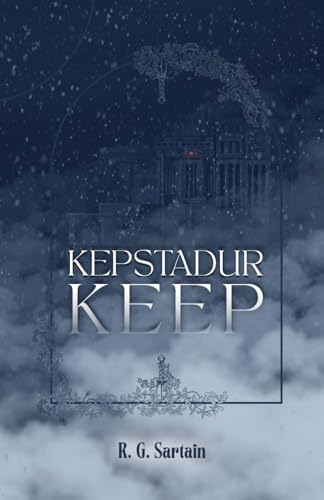
Sonja Vinzler (of Kepstadur Keep, by R. G. Sartain)

Dear readers, tonight with us is a woman trying to find a way to bring her brother back from the dead. Though educated in magic, it is still an uncharted territory. She is here to talk about haunted places and the undead, as well as family ties.


Tell us a little about where you grew up. What was it like there?

Jrendavar is great — a little grey, so I’m told, but you get used to that after a while. A peaceful country for the most part, at least in the West where I’m from. The nearest city is Helslidir, though these days, our vineyard might be better known. Snow’s Grove Vineyard. My grandparents were the first to discover magic to grow grapes where grapes really didn’t want to be grown. 

Did you have any favourite toys as a child? Any cherished memories?

If I’m honest, it’s hard to remember too far back. There was a time where my siblings and I would bind hay into little stick-figure people. None of them lasted long enough to become favorites. We spent a lot of time with our imaginations, my brother, sister, and I. They were both talented with perception magic early on — illusions and hallucinations and whatnot. So maybe “imagination” isn’t quite the right word.

What do you do now?

Oh, well… Well, I’m a bookkeeper, actually. Or I was. Once I get back home, I will be again, probably. Numbers just work in my head. I keep up with figures for most of the businesses that work with the vineyard. I am nervous to find out who’s been tracking everything in my absence. Surely someone has…

What can you tell us about your latest adventure?

Sure, yes… What is there to say about Kepstadur? It was pretty cold for the summer months, even here. Beautiful, but cold. And definitely haunted. There were times I couldn’t hear my own thoughts, the voices were so loud. It was hard to know the real from the fake — and losing that certainty in yourself is pretty jarring. I knew the magic there would be strong, but the revenants… that first attack still rattled me. 

Continue reading “Sonja Vinzler (of Kepstadur Keep, by R. G. Sartain)”

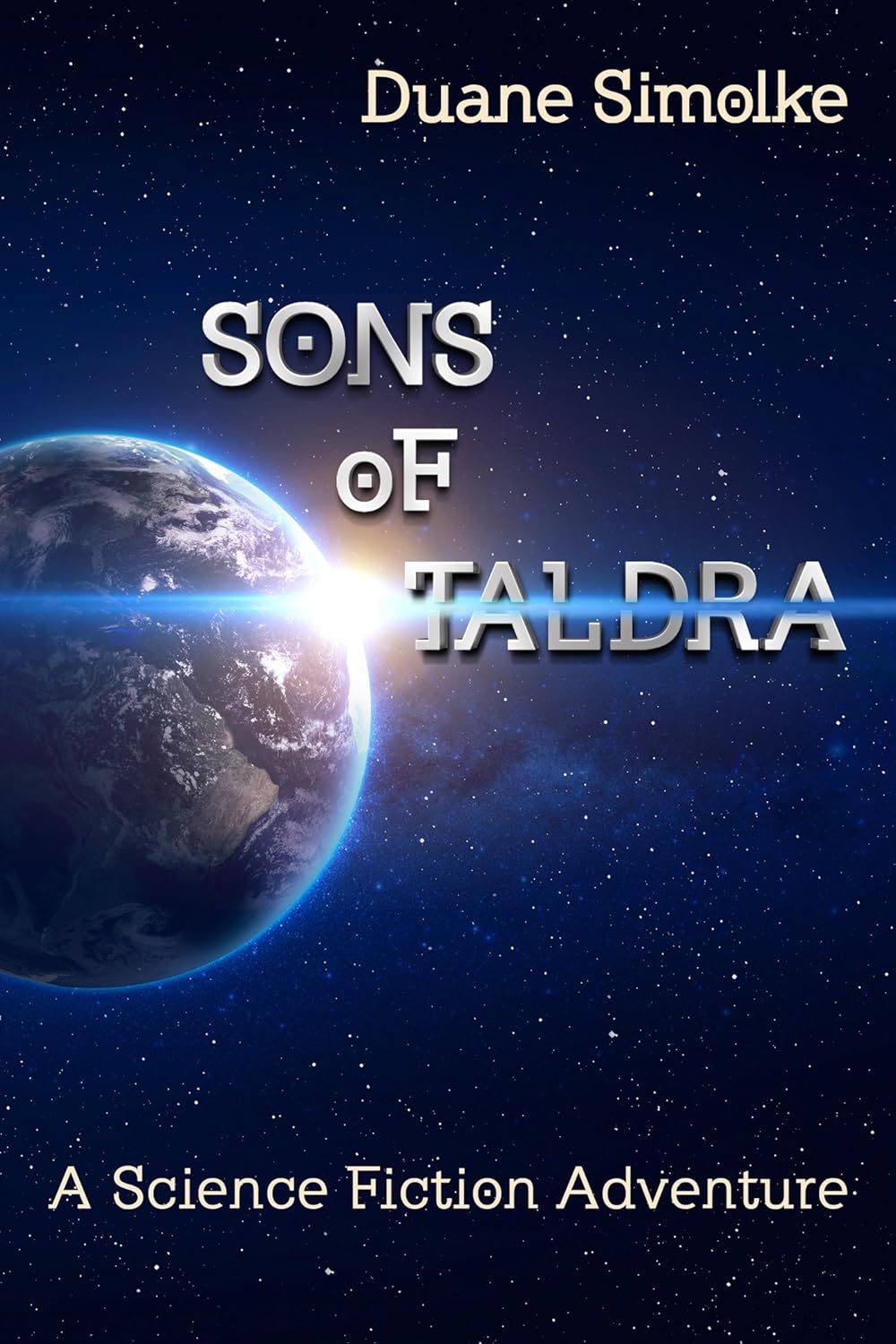
Admiral Nil (of Sons of Taldra, by Duane Simolke)

Dear readers, tonight we bring you a reality show from an alternate reality, one where the human home world comes together under a constitution based on the Iroquois Federation. Our guest is here to speak about interplanetary conflicts, as a race of alien shapeshifters is intent on using people as a food source.


Welcome to the season premiere of Lalololalo’s Celebrity Show. Over the past forty years, you’ve known me as the gossip master who interviewed wallscreen actors, hologram designers, pressure tournament champions, and the like. Well, today, I’m the luckiest woman on the planet Valchondria, because the Top Maintainer herself is my special guest, Admiral Nil! Tell us a little about yourself, Admiral.

As you mentioned, I am Admiral Nil. As the commander of the Maintainers, I keep the world safe.

How would you describe the Maintainers to people who don’t know?

That’s a disturbing thought. We are a combination of military and police on the human home world, Valchondria. We guide Valchondrians in their daily lives, to keep them safe from disrupters and heavy hazard thoughts.

Did you have any favorite toys as a child? Any cherished memories?

I had many toys, and I organized them in my room according to size and cuteness. Larger was always cuter. That was before the time when everyone regained the ability to see in color, but I imagine the largest toy was more brown than the gray shade I saw. It was a hiliate, a huge crustacean that our Valchondrian ancestors kept as pets and a mode of transportation.

My parents knew that I displayed the superior genetic code of someone who could attend one of the elite academies that train the Maintainers. They even knew, somehow, I would one day lead the Maintainers. I talked of little else, though I eventually found a boyfriend and told him we would become married one day. My spouse is very ill now, and our son is the only comfort in my life. No, my job is the truest comfort, but I do love my spouse and my son. They are treasures.

What can you tell us about your latest adventure?

While we’re facing a deadly outbreak of influenza, a spaceship is on a trajectory to Valchondria. As your audience hopefully knows, we outlawed contact with anyone outside our atmosphere years ago, because one of our ships of colonists encountered a hostile alien race called the Naadloosh, while our other ship of colonists became so entangled in an ancient religion that they named their colony planet after their supposed holy book, Degranon.

I’m admittedly concerned about the ship that’s approaching. The Naadloosh never found Valchondria. We have a planetary defense system, but aside from the occasional meteor, we have never had a situation that tested its effectiveness. I don’t want to find out how well it can defend us. The Naadloosh slaughtered the colonists immediately. They were just waiting for a chance to attack someone and kill them. We’ve never understood why. It was something about their territory, their area of space. They’re a savage species that only bring death. I shudder at the thought of them finding us.

Continue reading “Admiral Nil (of Sons of Taldra, by Duane Simolke)”

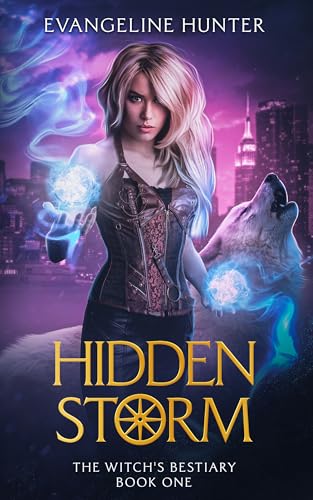
Alicia Stormwell (of The Witch’s Bestiary, by Evangeline Hunter)

Dear readers, tonight with us is a vet specialising in magical creatures turned reluctant hero. She is here to talk about vampires, werewolves, and manticore poop management.


Tell us a little about where you grew up. What was it like there?

New York City, baby. Born and raised. I’ve been yelled at in ten languages before my morning coffee and once saw a cyclops try to parallel park in Midtown. My mom ditched me when I was a kid—vanished into a cloud of magical smoke or an MLM pyramid scheme, hard to say. I was raised by her sister, Aunt Lydia, who is basically what would happen if Aunt Mame ran a cursed antique shop in SoHo and could hex your ex with a glance. She taught me how to make potions, run a business, and never trust anyone who says “trust me.”

Now, I run a nonprofit called The Bestiary, which rescues magical creatures and gives them a second chance. And thanks to a permanently irritated dimensional witch, my nonprofit is now physically attached to my apartment. The good news: my commute is excellent. The bad news: sometimes a kelpie wanders into the kitchen and eats my cereal.

Did you have any favorite toys as a child?

Most kids have teddy bears or glitter wands. I had a lock-picking kit. Aunt Lydia gave it to me when I was seven. She said, “Sweetheart, your magic’s about as reliable as a goblin accountant, so you’ll need backup.” I also did martial arts, fencing, and the occasional magical beast wrangling camp. You know. Normal childhood.

What do you do now?

Technically, I’m the founder and director of The Bestiary, a rescue and rehab center for legendary beasts. Realistically, I clean up unicorn poop, negotiate with territorial manticores, and rescue abused phoenixes from underground fighting rings.

And okay, fine, sometimes I moonlight as a freelance magical crime consultant. If you call breaking into smuggler hideouts “consulting.”

Also: we accept donations. Like, right now. Seriously. I have a Venmo.

What can you tell us about your latest adventure?

Oh, just your average Tuesday. A vampire detective, very broody, very cheekbones, shows up and hires me to help investigate a dead witch and a suspiciously attractive wolf. My bank account says yes before my brain catches up. Turns out, the wolf isn’t just magical. He’s a werewolf. And not just any werewolf: Kyle. Tall, brooding, and somehow always shirtless. Suspicious, right?

Except… he’s innocent. I can feel it. Which means someone else is framing him—and if I don’t clear his name, the real killer might make me their next ritual sacrifice.

Continue reading “Alicia Stormwell (of The Witch’s Bestiary, by Evangeline Hunter)”

Harold Bergman (of The Wichita Chronicles, by H.B. Berlow)

Dear readers, tonight with us is a Jewish private detective who is rather introspective after coming back from WWII. He is here to talk about his life as a policeman before becoming a private detective, and about the dark underbelly of society where shadows dance with malicious intent and faith emerges as his sole weapon.


Tell us a little about where you grew up. What was it like there?

I was the only child in a Jewish household in Wichita, KS. When I wasn’t reading Torah and Talmud, I snuck in a few short stories by Black Mask writers.

Did you have any favourite toys as a child? Any cherished memories?

Most of my friends came from temple or school. My Jewish friends had dreams of being a doctor or a lawyer. I decided to become a cop.

What do you do now?

I put my desires to be a detective sergeant on hold and enlisted after Pearl Harbor. I made it all the way to December 1944 when my foot and leg were shot up. I’ve got an annoying limp that I do my best to ignore. I became a private detective because it made about as much sense as returning to the police force or becoming a rabbi, like my father wanted.

What can you tell us about your latest adventure?

I was just about to propose to my high school sweetheart, when a wealthy older lady’s chauffeur, shall we say, escorted me to her home to locate a missing ‘companion’. It soon wound up with connections to a gangster who died 25 years prior.

What did you think as you uncovered the leads in the case?

Every lead I turned up related to a gangster named Eddie Adams who was killed in 1922. It didn’t make sense…until it did.

Continue reading “Harold Bergman (of The Wichita Chronicles, by H.B. Berlow)”

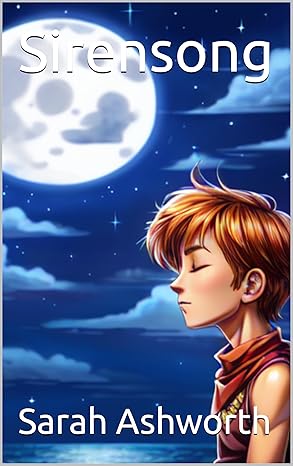
Jasper Ashford (of Little Hamlin Chronicles, by Sarah Ashworth)

Dear readers, tonight with us is a high-school student, juggling school, life, and magical training. He’s here to tell us about supernatural occurrences, a shipwrecked redhead, and a mysterious song.


Tell us a little about where you grew up. What was it like there?

Well, it all depends on how far back you want to go. If its my early childhood then I grew up in an orphanage in a not so glamorous part of town. The place itself wasn’t too bad, the staff taking care of us were pretty decent. It’s just there wasn’t always enough to go around so kids were basically fighting for scraps, couldn’t really afford to be weak there. Fun times.

In my later childhood until now I was adopted by a pretty sweet lady who took me to her home on a small island. It was nice, she’s not wealthy by any means but she lives a comfortable life and it was just nice to have my own bedroom. Though I scared her when I was hording food in my room when I first moved there. It took a bit of time but I became secure enough to not do that anymore.

Did you have any favourite toys as a child? Any cherished memories?

There was one time at the orphanage when me and Eric decided to steal the cookies in the kitchen. It was a rare treat for us and we wanted them. OK, I say we decided it was more I woke Eric up in the middle of the night and wouldn’t let him go back to sleep so he went along with me to get it over with. His words, not mine. We had a blast though and got to enjoy the chocolaty goodness of the cookies.

Another fond memory was when I found my magic spark. I tried to pickpocket a woman and she saw me do it. I remember backing away and holding my hands out in front of me and poof I fired a pink cloud in her face and ran. She eventually caught me but didn’t turn me in. Instead, she adopted me because in her words I reminded her of a younger version of her and she saw my potential with magic.

I had stuffed dragon which I keep in my closet and cuddle it every now and again. Hey! Dragons are cool OK!

What do you do now?

Right now, I’m just a high school student who’s juggling school, my magic training, finding interesting things to write about in the school paper. Also going on some strange adventures which sometimes involve getting into trouble but I think it breaks up the monotony a little bit. Wouldn’t you agree? Sure, I fall asleep in Mr. Hughes’ class a lot but the adventures are worth it.

What can you tell us about your latest adventure?

Well, it all began with my friend Eric being kidnapped, can’t leave that guy for five minutes without something happening to him. I thought he’d abandoned me again and I was angry as we had only just managed to patch things up after all the craziness from before. It was only when I found evidence that he didn’t leave of his own free will that I started to look for him. I reluctantly teamed up with Mel who had hurt and betrayed me before and we ended up going to the mainland to search for him and bring him home.

Continue reading “Jasper Ashford (of Little Hamlin Chronicles, by Sarah Ashworth)”

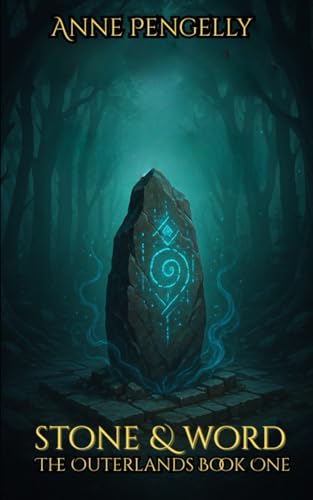
Weylin & Asurei (of Stone & Word, by Anne Pengelly)

Dear readers, tonight with us is a young boy with a special magical gift and a travelling assassin. They are here top talk about their world, and what happens when ancient seals begin to crack.


Tell us a little about where you grew up.

Weylin: Fenward. A river village where nothing ever changed, or so it seemed. My earliest memories are of chasing fish through the reeds, listening to my mother’s voice carry over the water. It was safe, small, a place where people expected you to stay and grow old in the same patch of earth. I would have been content with that once. But now the seals are breaking, one by one, and Fenward has become a memory instead of a destiny. The world is demanding more of me than I ever thought possible.

Asurei: I didn’t grow up anywhere worth remembering. My childhood was an apprenticeship to hunger. Streets teach you quickly who you are, or who you’ll have to become to survive. I became sharp. I became fast. And eventually, I became a Ghostblade. The Order of the Ghostblade forged me into what I am: an assassin who steps out of shadow when a name is given. My past is smoke. My present is steel.

Did you have any favourite toys as a child?

Weylin: A carved top, rough and unsteady, made by my father before he died. It never spun straight, always wobbling across the floor, but I loved it. I used to think if I could just make it balance, I could fix everything that had gone wrong, bring him back, stop the grief from swallowing us. Looking back, I suppose that was the first time I believed broken things could be mended. That belief is what carries me now.

Asurei: Toys are for children who have time to play. I didn’t. But I did learn early that people can be bent and broken like wood or glass. Fear was my toy, manipulation my game. The first time I discovered I could make someone dance to my tune, it was intoxicating. But if you press me for a softer answer… once, long ago, I had a ribbon, pale as moonlight. It was torn from me, like everything else. I still remember how it felt between my fingers.

What do you do now?

Weylin: I walk the world, whether I wish to or not, because the seals are breaking and something old and vengeful is stirring beneath the earth. The words I carry, the stones that answer me, they’re part of it. I didn’t ask for this burden, but if I don’t stand in the breach, who will? Fenward no longer needs me; the world does. And so I go on.

Asurei: I kill when the First Flame commands. A name is spoken, and I make sure the voice that spoke it is never silenced, or that the name belongs to a corpse. I am a Ghostblade, feared because I never miss. But sometimes, in the quiet after a mission, I wonder what I might be if I wasn’t only a weapon. Redemption is a dangerous thought for someone like me, but it lingers, like a shadow that refuses to leave.

What can you tell us about your latest adventure?

Weylin: I’ve walked roads I never imagined, met people who carry more secrets than smiles, and learned that magic listens, but not always kindly. The seals are breaking, and with each crack, something terrible strains against its bonds. I don’t know if I can stop it, but I know I have to try. That’s the shape of my adventure: stepping forward even when I’m not certain my feet will find solid ground.

Asurei: Adventure? Don’t insult me. What I’ve lived is blood, betrayal, and shadow. I’ve taken lives and unmade kingdoms in silence, and the world calls it ‘necessary.’ But I’m beginning to see that perhaps necessity is only another word for chains. Maybe that’s what this journey is teaching me, that I’ve been bound all along, and the knife at my belt can’t cut the ties that matter most.

Continue reading “Weylin & Asurei (of Stone & Word, by Anne Pengelly)”

Willy Jones (of A Night in Annwn, by Owen Jones)

Dear readers, tonight with us is a shepherd who lost his will to live after his wife’s passing. After collapsing and waking up in a hospital he soon realises he made it to the Welsh Afterlife — but things aren’t as he had thought they would be.


Tell us a little about where you grew up. What was it like there?

I was born and grew up on a mountainside, although it was only a small mountain, near Brecon in South Wales. My parents had a tiny cottage there. It was very quiet; we had no neighbours, so although we didn’t own the mountain, it felt like we did. The only road to the top passed by our house, but few people used it.

I was an only-child, my father was a shepherd of his own flock, which roamed freely on the mountain, since there were no animal predators. My mother took care of us, and made things, mostly foodstuffs, to sell in the village on a Saturday.

Perhaps it was my nature, or perhaps it was the environment, but I grew up a quiet, thoughtful, but not lonely, child. I loved my parents, and our lifestyle, although those feelings were never expressed openly. It wasn’t done in those days. I was equally happy helping my Mam in the garden or kitchen, or my father with his sheep, which, although they wandered freely, always came to meet him on ‘their spot’ at 08:00 AM.

I liked school, but not as much as being on our mountain. I left as soon as I could, at fifteen, I think, to help my parents. We were a Christian family, but really only enjoyed singing hymns in the village church on Sunday mornings. Our community’s real belief, which was not incompatible with Christianity, was in Annwn. We sometimes discussed it among ourselves, but never with strangers

Annwn is the ancient Welsh, perhaps even Celtic, word for the pre-Christian, Welsh Heaven.

When the early Roman missionaries arrived, they persecuted us, so they say, because Annwn is underground – some say under the mountains, which we can see a little way off from our cottage. The Romans thought that meant that we were Devil-worshippers, which was untrue. That’s probably why we all go to church, enjoy our singing, but don’t discuss religion with outsiders.

We remember what that can lead to even 2,000 years later.

Continue reading “Willy Jones (of A Night in Annwn, by Owen Jones)”

Geoffrey (of The Way of Lucherium, by Christopher Rziha)

Dear readers, tonight we bring you the official record of the Committee of Social Order: Geoffrey, former bard. Geoffrey was a bard for the Committee of Spectacles in the grand nation of Trastaluche. After being disgraced and stripped of his post for a series of indiscretions, Geoffrey disappeared, turning up several seasons later in the company of the Followers of Joaquin, a known group of insurgents who are strongly suspected to be planning open warfare with against the Committees. Geoffrey is currently wanted for high treason, the spread of propaganda, and the practice of black magic.


Did you have any favourite toys as a child? Any cherished memories?

A mandolin, I’d say. I’ve loved music since before I knew what love was. I remember holding hands with my mother and going to a festival hosted by the Committee of Spectacles when I was barely able to walk. I can still recall the tunes they played that day.

What do you do now?

Currently I’m recovering from my wounds and serving as an advisor to the army of Hazcaluche while they prepare for their campaign against Trastivo.

What can you tell us about your latest adventure?

I had the inside scoop on the type of story that makes any bard’s career… and then everything around me exploded. Literally. Next thing I know, I’m a nobody in Muckland and the only thing keeping me from picking a fight with the wrong person and suffering the consequences to end my pain is my own cowardice. Then, one night, everything changed. Some strangers who were involved in some definitely less-than-legal activities gave me good, shelter, and support. And the more time I spent with them, the more I realized that everything I thought I knew -about progress, society, and truth- was all mixed up backwards. I joined their band, and was even chosen to play a small part in their upcoming plans to undermine the Committees… and that’s when it all went south.

Continue reading “Geoffrey (of The Way of Lucherium, by Christopher Rziha)”

Blog at WordPress.com.

Up ↑