Search

The Protagonist Speaks

Interviews with the characters of your favourite books

Tag

Indie Author

Silas Dryden (of Rescuing Her Knight, by Rosie Chapel)

Dear readers, tonight we’re hosting the villain of the piece. A shady man, intent on revenge, is prepared to sabotage the happily ever after between a lady and her long-lost knight… permanently.


Tell us a little about where you grew up. What was it like there?

Silas shuffles in his chair: Not sure as anyone’d wanna know. Rookeries is pretty grim. Poverty, overcrowding, nuthin‘s yer own, death, disease, you name it. Was all I knew fer a long time, mind, and as nippers we didn’t much worry.

Did you have any favourite toys as a child? Any cherished memories?

Barks with laughter: Toys? Yer kiddin’ me. Toys is what the gentry has. That said, we knew ’ow ter have fun. Hide ‘n’ seek was a favourite. Rookeries is a great place fer that, so many alleys and hidden corners, abandoned buildings, better still, down the docks. Got ter know it like the back o’ me ’and, I could walk it blindfold. Just ’ad to watch out fer the Runners. Oh yeah, we used ter see who could get the farthest on the back of an ’ackney afore the driver kicked us off. Nickin’ coin pouches… now, that was the best. Them nobles is easy pickin’s. Aye, we ’ad a lot ‘o’ fun. Yer make do, see. 

What do you do now?

Silas puffs up his chest: I am a businessman. I have an office an’ everything. Yer could say I’m in the service industry. I got several… errr… enterprises on the go at the moment, successful they are, I’m raking in a good profit. I have an ’andful employees who know which side of their bread has jam on it. If yer get me drift.

What can you tell us about your latest adventure?

Silas steeples his fingers. Hmmm… now that’s a bit of a tickler. See, I had this partner, one ‘o’ the gentry, a viscount he was, but ’e tried to double cross me. Nobody doubles crosses Silas Dryden and gets away wiv it. Dunno what was goin’ on in ’is noggin (Silas shakes his head in bafflement). Anyhow, I had to deal wiv it. ‘E shan’t be bovverin’ anybody ever again, and that shoulda been an end to it. Regrettably, of late there’s been some unsettling incidents, yer know, them too close for comfort moments, and I reckoned someone had been tattling. I needed ter get ter the bottom of it.

Continue reading “Silas Dryden (of Rescuing Her Knight, by Rosie Chapel)”

Aldeaith Tearshan (of The Outworlder, by Natalie J. Holden)

Dear readers, tonight with us is a young soldier who left his bucolic world to get a taste of the bigger universe. He’s here to tell us about the people of a thousand worlds, of the technomagic that binds them together, and picking sides when the rebels are people he grew up with.


Tell us a little about where you grew up. What was it like there?

I was born in Nes Peridion, one of the newly colonized worlds in Meon Cluster. My parents came from Tarviss—well, they were brought by their lord, but quickly realized that away from Tarviss he had no way to keep them under control and got rid of him. So we lived as free people.

My parents were simple farmers and the first people to settle in Nes Peridion. It took them a lot of work to turn it into the fruitful farming colony it is today. The beginnings were especially hard, our crops and stock needed time to adjust to local soil and climate. I was born a few cycles after they settled and I think that by that time, the worst was already over. Some years were rough, though.

What did you do as a child?

There was always something to do at the farm, and we had to help since we were old enough to stand. Not the hard stuff, just keeping an eye on zeeath birds or working in the herb garden.

‘We’?

I have a sister and two older brothers. Well, had. My brothers died as children, taken by the diseases. I don’t really remember them too well.

My sister’s fine. She lives with our mom in Nes Peridion.

Between dead siblings and constant work, that sounds like a pretty rough childhood.

It’s the one I had. Do you think Dahlsian children have it better? They may get their education and their playtime, but they spend their lives locked in. They never feel the sun on their faces, or the breeze in their hair. They never play with living animals. They don’t even eat real food, only this tubed sludge. And when they go outside, they freak out, they go down with allergies, sunburn, and their immune systems are so compromised, a light cough can kill them.

I was never sick in my life. Drop me in a new world and I can survive, I don’t even need any fancy technomagic. I know how to find shelter, make water safe to drink, find food. I could build my own house if I had to. And I’m strong enough to carry a Dahlsi person through half the world—I already did that once, when my colleague broke her leg. She was as light as a feather.

So was it really that bad for me?

Do you have any cherished memories?

Hm. Maybe the times Aeva and I ran to the river to play. I liked making patterns with colorful stones. Aeva was always better at pretending. She also learned to crochet little dolls—I think in old Tarviss they were used for some rituals, but we just used them to play. Although mom would always undo them to save the yarn. Textiles were hard to come by in Nes Peridion.

Just the two of you?

Yeah. We were never good with other people—well, Aeva was a bit better, she even had friends. But most of the time we preferred each other’s company.

It got harder as I grew older and my brothers died. The amount of work to do remained the same, but there were fewer hands to do it. We were a small community, you know, so we had to do everything by ourselves. Not just grow food, but make houses, make furniture, make tools. Travel to the lake to fish or the nearby mountains for salt and lime. Also, there was no iron anywhere nearby so if a tool broke and no trader came, we had to replace it with a flint one. 

Flint?

It’s not so uncommon. All the metals in Tarviss have been mined ages ago; iron tools have to be brought from off-world and if they break, people have to use what they have on hand.

I became quite good at this. Maybe because I could sit for hours hitting rocks until they produced something I was happy with.

What do you do now?

I left Nes Peridion to work for Mespana. It’s a Dahlsian organization, but they accept outworlders. Our primary job is exploring new worlds within Meon Cluster and assessing their usefulness to the colonists. But we also had other duties. Escorting tax collectors or helping colonists with various problems.

Continue reading “Aldeaith Tearshan (of The Outworlder, by Natalie J. Holden)”

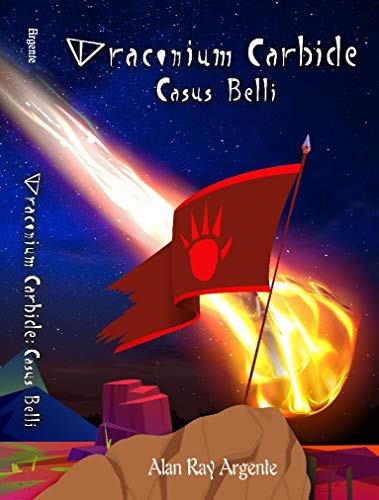
Ral Ranaya (of Draconium Carbide, by Alan Ray Argente)

Dear readers, tonight with us is a man who betrayed his homeland, by giving railguns to dragonkind.


Tell us a little about where you grew up. What was it like there?

They’re not my type and I was such a loner back then. But even then, they saw me as a freak or insane all because I walk alone, and everyone wanted to see and expect me get embarrassed in front of everyone. I had no friends beside me nor anyone who knew me. Besides, even if I did forge a friendship with my fellow humans, they would leave me and turn their backs when I needed them the most.

What can you tell us about your latest adventure?

It’s an ongoing resistance against the Ardynian Crown with me as being the gunrunner of Javyria. What did you expect? I know what it is like being different among them. Welcome to mob rule where the interest of the collective is more important than the individual.

What did you first think when you gave the dragonkind his railguns and betrayed Ardynia?

What did you expect? I was mistreated every day of my life by my fellow humans and lousy leadership at Ardynia. Believe me, it has always been decadent at the top and seedy at the bottom. I happen to be in the middle of the crossfire. I know what it is like being trampled down, but refused to give in countless times over. You really expect me to have a shred of sympathy to them after what they did to me? They mocked me throughout my entire life and my talents just because I never followed everyone and even the elders who knew. Now their jealousy, hatred and dishonesty runs rampant in the upper echelons and courts as they tried to hunt me down like the traitor to his own blood. Such acts of hypocrisy are what made me do this and betray my own.

I don’t care what will happen to my former homeland. Besides, when was the last time they cared about me?

Continue reading “Ral Ranaya (of Draconium Carbide, by Alan Ray Argente)”

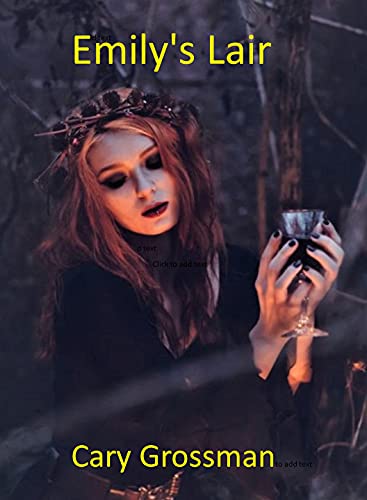
Emily Kostova (of Emily’s Lair, by Cary Grossman)

Dear readers, tonight with us is the owner of a local bookstore. Her knowledge of the Whitechapel murders and of Jack the Ripper bring her to the attention of the police. She is here to tell us about how investigating a current murder brought up a woman accused of witchcraft in the seventeenth century.


Tell us a little about yourself.

I’m Emily, the proud owner of Emily’s Lair, a private, non-corporate bookshop in New Vernon, Connecticut, with a wonderful variety of books. There’s an entire wall dedicated to classic literature, for example, sections on art, exploration, science, history, ancient civilizations, even true crime. You can get the latest releases, of course, but most of the shop is made up of books that I find interesting and think other people will too. I’m especially proud of the special section in back that’s filled with books on the European witch hunts. It also features more than one biography on the woman responsible for singlehandedly ending the witch hunts, Liesbeth Jansson.

Liesbeth Jansson? Who was she?

She was a woman from Breda, a city in the Netherlands. She got married to a professor from Leiden, a city that became a beacon of the Enlightenment. He died when the Plague swept through Leiden, and because Liesbeth was smart and strong-willed and refused to conform to what citizens at the time considered to be a “proper Christian woman,” she became a target. At that time, women who were different, or, especially, who weren’t submissive to men, were often accused of witchcraft.

Was Liesbeth Jansson accused of witchcraft?

Oh yes. But she fought back. You see, none of the women accused of witchcraft—the accused were almost always women—were actually witches. Many were elderly spinsters, midwives, or rich widows like Liesbeth. If you had money, you were a prime target because a witch’s money was always seized by the state, and witch hunters loved money. But with Liesbeth they had stumbled on someone they never expected to encounter—a woman with real power. She escaped, hunted down each of her accusers, and killed them in a very public and brutal manner. Once people realized there was a chance that they might accuse a woman who could fight back, the witch hunts ended.

What can you tell us about your latest adventure?

I met Will, a homicide detective. I fell for him right away despite that he was questioning me. You see, I was a person of interest in a murder that Will was investigating because I had once dated the man who was killed. Will came in the shop to ask me some questions; that’s how we met.

Continue reading “Emily Kostova (of Emily’s Lair, by Cary Grossman)”

Captain Phileas Nemo (of The Lone Captain, by Lewis Crow)

Dear readers, tonight with us is a submarine‘s captain – the son of the most famous captain the Victorian-era has ever seen. He’s here to talk to us about exploring shipwrecks, aiding the oppressed, and supporting freedom fighters, abnd about the fragile international balance of power.


Tell us a little about where you grew up. What was it like there?

I was the son of a wealthy Polish count, and my life certainly had its advantages.  I received a rigorous and thorough education in Warsaw, both at schools and from Papa.  My family traveled across Europe and hosted many social functions at home.  But despite our wealth, Papa always showed concern for the less fortunate.  He never let me and my sister forget how blessed we were, and he was a champion of the downtrodden.

Did you have any favourite toys as a child? Any cherished memories?

Papa was an engineer, and he actually made some of my toys himself.  I loved spending time with him.  My favourite moments were when he and I created simple toy boats out of wood, paper, and paint.  In general, I just enjoyed being together as a family, whatever we did.  I thought our happy life would never end—until the rebellion started and the Russians destroyed us.

What do you do now?

I am captain of the NAUTILUS, the magnificent submarine Papa built and sailed in for many years.  My crew and I explore the oceans to further man’s scientific knowledge of them.  We also gather wealth from sunken treasure ships of old and use it to help finance independence movements around the world.  The oppressed find allies in us.  Some of my activities draw (unwanted) attention from the nations, particularly Britain and America.  We are no threat to them, so they should let us be.

What can you tell us about your latest adventure?

In the last couple of years, we have been significantly involved in a certain island nation’s fight for independence.  We made a bit of military history in the process, I might add.  After that, circumstances forced us to take on the task of confronting a dangerous man in an even more dangerous ship who was trying to bring a mighty nation to its knees.  If a powerful country can be so threatened, what hope would the poor and defenseless have against such an adversary?

Continue reading “Captain Phileas Nemo (of The Lone Captain, by Lewis Crow)”

Verena (of Verena’s Whistle, by K. Panikian)

Dear readers, tonight with us is a grad student from Alaska who found out her family has been keeping secrets about their origins and their purpose. She’s here to talk about magic, love, and saving the world from Chernobog’s demonic beasts.


Tell us a little about where you grew up. What was it like there?

Hey guys! My name’s Verena, but my friends call me Very. I grew up in Anchorage, Alaska with my parents and my Grandpa Basil. I always knew we had magic, but never why or how. But a few months ago, a meteor struck the ground in Russia and man, I found out some secrets!

Did you have any favourite toys as a child? Any cherished memories?

Hmm, favorite toys? I guess, being from Alaska, I have to say my pond skates? Maybe I should say something sweet and cute, like my dolls, but honestly, I was a tomboy. I was a bossy kid and I’m still pretty take-charge. I liked to play sports and run around in the woods with the kids that lived nearby.

My cousins, Theo and Julian, would come up and visit in the summer and seriously, summertime in Alaska is like, heaven. We’d camp and hike and mess around with our magic.

There are some great magic wielders in my family, people that can launch lightning bolts or create incredible illusions, or people that can see into the future. But my magic never manifested more than a little—like, I could make sparks. Big deal. Everyone was really nice about it, of course, but it was a definitely sore spot for me.

I threw myself into my sword training instead—my family is really big on martial arts training, sword play, that sort of thing. I figured, if I couldn’t do magic, I’d learn other ways to defend myself. And, I have to tell you, I’m really, really good with my sword. Should I just have said my sword? I like my sword—it’s this 1796 light cavalry saber and seriously, it is SWEET.

What can you tell us about your latest adventure?

I’m not supposed to tell anyone, but you look like you can keep a secret.

So, the people in my family that can do magic? It turns out that we’re descended from those crazy Roman-Vikings guys, the Varangians. Ever heard of them? A thousand or so years ago, the Byzantine emperor sent a cohort of his Varangian Guards to Rus. And when they got there, they vanished, poof, gone from the history books.

What ACTUALLY happened is that a meteor struck their camp and it opened a portal to another world! Can you believe it? I couldn’t believe it, the first time Grandpa Basil told me the story. In the other world, they learned magic and they battled demons. They built a huge citadel and just tried to survive that really hostile place.

Now, about 100 years ago, my great aunts and uncles were out hunting demons in the countryside and they found another portal back to Earth! They went through and ended up in Russia, which, you know, was not a great place to be at that time. They hid and fled and ended up in Alaska. And they kept their origins a secret. Obviously.

But when that meteor struck in Russia in February, they knew someone would have to go and check it, to make sure none of the demons came through. So, I did! I went with Julian and Theo and we kicked some demon ass, let me tell you.

Continue reading “Verena (of Verena’s Whistle, by K. Panikian)”

Victoria & Friedrich (of Under His Spell, by Luv Lubker)

Dear readers, tonight we are hosting a royal couple, the Princess Royal of UK and the future emperor Prince of Prussia. Known as Vicky and Fritz, they are here to tell us about life and love across 19th century European courts.


In tonight’s double interview we separately ask Fritz and Vicky, who are husband and wife, mostly the same questions — but they can’t see or hear each other’s responses.

Tell us a little about where you grew up. What was it like there?

Vicky: Dear Windsor is the home of my heart, and though Buckingham Palace is where I was born and lived a good deal of my earliest years, Windsor is where my happiest childhood memories live and is where we spent our honeymoon. My memories there of my childhood are among the happiest of my life – but happy in a different way than my life with Fritz – all my dear siblings and Mama and Papa were always there. Buckingham Palace is not a Home – it is a Palace, and is not very welcoming to little people.

Fritz: The Neues Palais was where I was born. It was a huge place, but I only knew a very small portion of it – the nursery – and my parents moved to Babelsberg before I remember very much. Babelsberg is a pretty place – but not… it was my home, but I didn’t love it.

What are your happiest memories of your childhood?

Vicky: My dear parents birthdays were always wonderful affairs in my eyes, with all of us children waiting outside the door with our drawings and things, and Mama in a pretty new dress when she came out, and Papa welcoming us all so lovingly. The Great Exhibition was one of the grandest events and is, of course, one of the dearest memories looking back, when Fritz was there and was always so kind. Papa’s loving advice during our lessons, which I treasured up and remember so well now…

Fritz: Happy memories? *sigh* My least unhappy memory of my early childhood was… perhaps Lotte’s birthday parties. I was always allowed to go to them and she was always kind to me, as was the Queen, Aunt Elise, who’s ward Lotte was. Later, our time in Mainz was not particularly unhappy, but… my childhood was not a happy one, I always wished myself out of the world. *Sighs and looks away.* I… I still have such thoughts, at times, when I am away from home – away from Vicky…

You are the Crown Prince and Crown Princess now. What does that mean for you? How does that change your life?

Vicky: Fritz’s being the Crown Prince means he has more duties, which he fulfills faithfully. We shall be the next King and Queen, some day, and perhaps, Emperor and Empress. We work steadily towards the dream of bringing into existence a peacefully united Germany. But it means we often have less time together, which of course is not particularly pleasing.

Fritz: Since I have become Crown Prince, I am required to be present at the Crown Councils. One might think this is an honor, and it is, but… to be a witness to some of the things which go on is unendurable. And Papa requires me never to speak at the Councils, so I am not a part of it, only a tacit witness they think they can control.

Continue reading “Victoria & Friedrich (of Under His Spell, by Luv Lubker)”

Mathew Slade (of Gaslight Gunslinger, by Sugar Lee Ryder)

Dear readers, tonight with us is an ex Pinkerton Agent turned detective and gun for hire. He’s here to tell us about the 1870’s Wild West, and of how a gunslinger used to open plains and prairies can deal with the criminal underworld of a crowded metropolis.


Tell us a little about where you grew up. What was it like there?

I grew up on the prairies of Nevada. It’s a dry, dusty sort of place. My family moved to Virginia City where my father got a job in the mines during the Comstock silver strike. As soon as I was old enough to hold a rifle, I honed my tracking and shooting skills killing varmints around Virginia City. People in those days didn’t care about the pest control, so whatever I bagged went into the pot.

My father was killed in a mine accident. He’d gotten us into debt, and mother and I still needed to eat and a place to rent, so I took a job as a wagon guard for the silver shipments. People who’d fallen on tough times or slid face first into the bottle were everywhere in a mining town. I got more practice with my gun than I care to admit before I left that town behind.

What made you leave Virginia City?

Mother caught the fever and after she died, I had to leave town to avoid payin’ off the rest of my father’s debt and caught the first train out of town. I ended up in Springfield, Illinois and since I needed to keep body and soul together, I lied about my age and I enlisted in the Army.

I looked as green as grass but shooting skills were in demand due to the start of the Civil War. So when I told them I was 18 they believed me.  I ended up 6th Illinois Cavalry under General Nathaniel Banks. I saw combat, I saw ‘the elephant’ as we then called it. Dreadful, just dreadful. I don’t want to talk about what I saw during the war right now.

All right, then. So what brought you to the current place in your life?

After the Civil war I joined the Pinkerton Detective Agency. First job I really liked, so I spent several years becoming the best agent there could be. Until my last assignment, where I was assigned to track two young women heading along the Oregon Trail to San Francisco.  

Turned out that Samantha Williams and Charlotte Hart were two tough young ladies, gave me a hell of time finding them. Hell of a job – I had to bring Samantha back to an abusive father. Idiot only wanted to marry her off like a damned cow.

Wild Bill Hickok was travelin’ with the two. He told me flat out what a lousy job I had. And when a legend of the West tells you that you’re in the wrong, you plain just listen. A year or two later, I quit Pinkerton and decided to head to San Francisco, where I am now.

Continue reading “Mathew Slade (of Gaslight Gunslinger, by Sugar Lee Ryder)”

Tardi Mack (of Doomed?, by Rita de Heer)

Dear readers, tonight we have a truck-driver from 22nd century Australia, who in a freak surfing accident got infected with a sentient alien substance. We caught him talking to Trucker & Jockey magazine, describing life post-infection while trying to avoid a rather persistent ex-girlfriend.


Tardi: You’re from the Trucker & Jockey magazine? Well met! I was a trucker once, with TLC, a family company. My dad and brother ran the workshop, and I drove our old Mack and jockeyed our live-mind freighter. Hope you’re recording all this? I also surfed for Virtual Surfing. Check me out on their website, they still have me in the sensor-suit surfing the actual waves and voice-overing the rides. My pay from them allowed me to rent in Watego’s Wall on Byron Cape, still a hot-shot tourist destination. Yes, formerly Byron Bay.

Me in the past? Oh, my name. My parents intended to register me as ‘Trader.’ The old man can’t spell and neither can I. Learning to write my name, I transformed it into ‘Tardi.’ They did an about-face on names when my brother Steve was born five years later. But Steve. Oh man. My brother and my burden. He drowned and I couldn’t save him. And Herm wouldn’t let him go. Don’t ask me more about Steve, mate. I’ll be tearing-up for the rest of the day. The landscape? Look outside. Boat-ways instead of streets. Major roads on stilts. Get up on one of them and in the distance you’ll see Wollumbin, a world-famous volcanic plug. Nearer at hand is the pimple called Chincogan. The Koonyum Ranges hunker at the back of the valley. And there are the trees, more than ever.

My kid-sized surfboard was absolutely my favourite thing when I was a kid. My dad taught me the basics. And there’s my cherished memory, him waist deep in the sea, pushing me off. Fishing me out when I fell. He’d plonk me back up on the board half-drowned, and push me off again. Remembering him then—like that—makes me feel warm in my heart, you know? You’re asking what I do now? Good question that I don’t know the answer to. On we go to one of my latest adventures.

Rowan: “Mph. You? Adventuring? I wish.”

Tardi: “Rowan, for Pete’s sake. Give it a rest. We broke up months ago. Hey Cy, good to see you’re still in charge.”

Cy, publican: “Seeing as we’re all holed up together in the Gondola, one of the premier eating and drinking places in town, we might as well wet our whistles. Ale for you, Tardi my man?”

Tardi: “Thanks be to you, Cy. Adventuring is thirsty work.”

Ben: “What’s with serving the Tree-man first? We should shoot him and all the rest like him.”

Cy: “Nothing for you until you put the gun down, son. (Grrr-grrrr-grrrr) And drat it, boy. You’re aggravating Tardi’s dog. Easy. Easy. Be a good dog and I’ll find you a bone.”

Tardi: “He’s not mine. He decided to come along. I call him Argie.”

Trucker & Jockey: “A cyborg dog?”

Tardi: “He’ll have had alien input, I suspect, because of that silvering. Argie and I were up on the ranges yesterday. As we came up to the Loreno Picnic place, we heard an almighty stoush of barking and growling, a woman shouting, and a little kid wailing. I dropped my pack and grabbed up a knobby tree-branch, ran into the fray, Argie beside me. The animals were the baskervilles, six of the critters. The woman and child were Del and Lilly Loreno. Del had held them off, but was tiring. Six of the critters. Argie and I turned up in the nick of time to help Del see them off. Seeing his product worse for wear, their damned inventor will hopefully keep better control. Those dogs are the cyborgs. Argie is flesh and blood.”

Continue reading “Tardi Mack (of Doomed?, by Rita de Heer)”

Blog at WordPress.com.

Up ↑