Search

The Protagonist Speaks

Interviews with the characters of your favourite books

Tag

Historical Fiction

Jordan McClellan (of Of Saints and Rivers, by Jim Logan)

Dear readers, tonight with us is a man who grew up in the shadow of his celebrated father and brother, more into books than farmwork or sports. He’s here to talk about his past across the Caribbean, a small Mexican village, prison, and seminary, and his continual search for meaning.


Tell us a little about where you grew up. What was it like there?

Born the youngest of three children in the early 1900s, I grew up on a farm and ranch along the Canadian River in western Oklahoma. Early Oklahoma was in many ways a paradox—beckoning but brutal, innocent yet unforgiving, offering up both hope and hardship. Wind and weather tumbled across the region, shaping the land and people. For every dream fulfilled, another died. But it was also a place of profound connection to the land, a lingering frontier togetherness, and a trademark grit and capacity to endure. You could smell the earth and hear its voices. It was a place of wide-open skies and endless horizons; of the immense sweep and quiet stillness of prairie, with a stark beauty all its own; a place worth loving.

What do you do now?

At the novel’s end, nearly one year ago, I was planning to ask Jenny Burns to marry me. Happily, she said yes, and we learned a few days ago that we’re going to be parents in around six more months. I’ve been working on a second novel—this one about western Oklahoma and its early settlers. We’ve been building a new home on the property and hope to be moved in by the time the baby comes. It’s an exciting time.

What was the scariest thing in your adventures?

The prison attack by Kushman and moments following were probably the most terrifying of my life. While I never glimpsed his face until it ended, I knew almost immediately who it was—and the deep voice left no doubt. I was acutely aware in that moment that my worst fear was about to be realized—and my broken nose and the bleeding and feeling of being strangled and suffocated only made it worse. I’ll be forever thankful to Oscar Tasanko for the knife. I never want to experience such a thing again.

What is the worst thing about being in prison?

The worst thing about spending time in the Oklahoma State Penitentiary at McAlester was that the place was a dehumanizing abomination. “Big Mac” housed around three thousand inmates in 1941—crammed into living spaces meant for half that many. The inmate population teemed with an assortment of thieves, forgers, bank robbers, rapists and murderers—some of which were feeble-minded, insane, drug-addicted, or sexually deviant.

My cellmate and I shared a space of eight-by-ten feet, with an eight-foot ceiling—stale, dank, choked off from fresh air or sunlight. We slept within inches of a cell toilet. A breeding ground for vermin and disease, the place reeked of disinfectant, and twice-weekly showers ran either too hot or cold. Prisons, from the beginning, have been places without forgiveness, where our unwashed masses, cast aside by an imperfect system, waver between hope and despair.

What is the best thing about it?

If there was a “silver lining” to prison life, it was that you had a lot of time to think—to ponder some of the deeper questions of what it means to be alive. I also gained an appreciation for small things I’d never noticed before—the freedom of a bird in flight; the beauty of a dandelion; the wonder of a butterfly.

Tell us a little about your friends.

I’ll discuss two I became close to—and two people couldn’t be more opposite. I met Oscar Tasanko in prison. A gentle giant of a man, Oscar stood nearly seven feet, was full-blood Kiowa, and was serving time for assaulting two police officers he felt had mistreated his mother. Oscar had a somewhat grotesque physical appearance, with severe acne, several missing front teeth, and a gaping cleft palate—untreated from birth—that bisected his upper lip. He’d grown up being mocked by strangers as a freak. We’d become friends after I’d remarked on a beautiful picture of his mother he carried in his wallet. He kept to himself, and we often visited during breaks in the prison exercise yard. While most regarded him as having little mental capacity, I knew better—I found him to be wary and slow to speak—but observant and intelligent. He was a loyal friend—and there came a time when I owed my life to him.

Sister Maria was an older, Catholic nun of legendary renown who lived alone in the mountain foothills, on the Mexican side of the Rio Grande. Revered for her miraculous healings and kindness to those in need, she was known to most as Angel del Rio—the “Angel of the River.” I came to know her when I volunteered my help for a few months after her assistant was injured. She was amazingly well-read, and our evening-supper discussions and debates were memorable. One evening she told me the story of how she became a nun—along with that of a secret, long-ago love she’d shared with only a few. Her story eventually became a novel that changed my life.

Any romantic involvement?

I was deeply in love with two women in my life. Since both are discussed in vivid detail in the novel—I’ll say no more.

Whom (or what) do you really hate?

While “hate” is a word I try to avoid, my sister Becky’s high school coach and first husband, Benny Taylor is someone I grew to detest. I have trouble understanding how such a successful coach could be such a loser as husband and father. He cheated on my sister, abused her, skimped on child support, and never showed at his daughter’s wedding. Benny was driven by two great obsessions in his life—winning and seducing young women. Our family learned a valuable lesson from him.

Can you share a secret with us, which you’ve never told anyone else?

Much in the novel was loosely based on my family’s history, and many of Jordan’s reflections mirrored my own. He was fifteen years old when his father hit him—I was fourteen. The circumstances were much the same—I said something in disagreement with my own father—when I probably shouldn’t have. Like Eamon and Jordan in the novel, my father and I healed our scars over time. My last words to him, as he died, were that I loved him.


A fourth-generation Oklahoman, Jim Logan began writing historical articles for Oklahoma Today magazine in 2011. His pieces have been recipients of a Western Heritage Wrangler Award, a Spur Award finalist, and received seven IRMA and SPJA awards. His newly-released first novel, Of Saints and Rivers, has received positive reviews from Kirkus and others, a Literary Titan Gold Book Award, and a “Recommended” rating from the U.S. Review of Books. Following the loss of his wife of thirty-six years, he moved recently to Tennessee to be closer to children and grandchildren. He returns regularly to Oklahoma, which he’ll always consider home.

You can find Jordan on the pages of Of Saints and Rivers.

Browse our archives for past interviews, or follow the site by email (bottom-right) to know immediately when your new best-book-friend makes an appearance.

Paul Landrum (of The Promise of Unbroken Straw, by Ken Steele)

Dear readers, tonight with us is a boy on the cusp of teenagehood, growing up in a US small town while WWII rages on.


Tell us a little about where you grew up. What was it like there?

[Interviewer’s note:  Paul glances away, begins fidgeting] Well, I’m not sure I want to talk about that. But since you asked, I was born on a wheat farm in Wyatt County, Oklahoma, though I got out of there as soon as I could. I guess I can’t really take credit for the escape, as those circumstances sort of fell in my lap.

So, you’re asking about life on a farm in the 1940s. Every day, and I mean every day, starts a couple of hours before dawn. Feeding the livestock, milking cows, repairing whatever just broke. And staying ahead of all sorts of things that can stunt the growth of the wheat. Then on school days, you get sidetracked for hours on end with a bunch of worthless gobbledygook, come back home, and pick-up where you left off until sundown. On a farm, it’s all about the crop, end of story. Maybe next year there will be time for fun. But realistically, probably not.

Did you have any favourite toys as a child? Any cherished memories?

Toys? Yeah right. Like we could actually afford stuff like that. Sorry, toys weren’t in the budget, other than my comic book collection, that is. I did get a new fishing pole one Christmas, and Grandpa and I trotted it out as often as we could. For fly fishing, that is, not that other sport where everyone gets their hands filthy messing with live bait. I do have a lot of memories of Grandpa . . . and my brother, Tim, of course. Both gave me tons of advice, wanted or otherwise, but I suppose most of it was worth hearing. Jake, on the other hand, he didn’t waste time on advice. He wasn’t like most fathers, in that way at least. In other ways too, if we’re counting. And then, of course, there’s Momma, who died when I was young. But I don’t want to talk about that.

What do you do now?

Well, I eventually ended up in some line of work that I’d never even heard of back on the farm. Never saw that coming. But I suppose I was always fond of math even though most of my classmates poked fun. My fault that they even knew about that, as I usually keep such things to myself. You know, just to blend in. There’s a lot to be said for blending in when you live in some corner of nowhere.

What can you tell us about your biggest adventure?

I’ve gotta be careful here as I don’t want to get ahead of myself. But I will say that we had plenty of ups and downs not long after my fourteenth birthday. For starters, I thought we were actually going to starve. Hand to heart, I didn’t see how we were going to get by. Even Jake was scared; I could see it in his eyes. But the way we climbed out of that hole, now that was something else. I guess I can say this much. Things took an . . . unexpected . . . turn. Some would say for the better; others would say that anyone who felt that way was certifiably crazy. At any rate, I wasn’t remotely prepared for the changes. None of us were. But we did the best that we could. Looking back, I just wish we’d have done some things differently.

Continue reading “Paul Landrum (of The Promise of Unbroken Straw, by Ken Steele)”

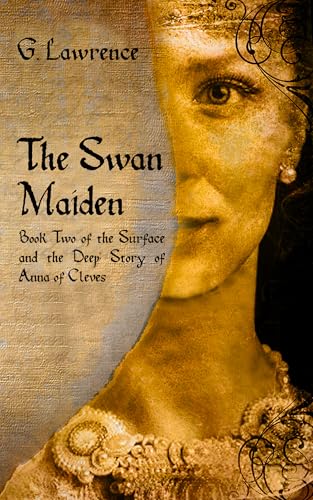
Anna of Cleves (of The Swan Maiden, by G. Lawrence)

Dear readers, tonight with us is a young noble woman, sent from her home in the Holy Roman Empire to be a wife to the English king. She’s here to speak about the women’s world at both courts, and what it’s like to be the fourth wife of a king who cast off his previous wives.


Tell us a little about where you grew up. What was it like there?

My homeland is known in England as Cleveland, but in truth it comprised two states of the Holy Roman Empire, Julich which were my mother’s lands and Cleves, which were my fathers. They were united by the marriage of my parents.  

Did you have any favourite toys as a child? Any cherished memories?

Many cherished memories. I grew up in the Frauenzimmer, the court of women, which in Cleves was kept separate from that of men, for the protection of the women. My mother, the Duchess Maria, presided over our court, teaching us many skills good for a woman to know, such as needlework, the art of cookery and medical skills. Until her marriage into Saxony, my sister Sybylla lived with us and we were close, most of the time. She did once throw a set of shears at my head, leaving a scar in my eyebrow, but she was contrite afterwards. Our younger sister, Amalia, also grew up with us there, a rebellious soul who loved to secretly write poetry and dreamt of becoming as Joan of Arc once was.

Although I loved my family, the Frauenzimmer was a restricted place to grow up, many rules and not a great deal of freedom. We were not prisoners, mistake me not, and we joined the main court from time to time for feasts and hunting, but our day-to-day life was sometimes dull.

All the same, given where I am now heading, I would accept a life of dullness over my present state of trepidation and fear.

What do you do now?

I am to be a bride, sent to marry the mad King of England, Henry VIII. The thought was that either Amalia or I would become his next Queen, he has had three already, and I did not want my sister sent to this much-married man. The English think we do not know how he cast off his first wife, executed his second, (many say she was innocent) and allowed his third to die of neglect, but we know. My brother, now my guardian and master, knows what kind of man he sends me to. But Cleves needs allies against the Emperor, and so, for the good of my people, I am sent to secure this alliance with the King by marriage. He is twice my age and has killed women he swore he loved as well as friends.

I do not want to marry him.

What can you tell us about your latest adventure?

My most recent adventure is to leave the only life I have known, in the sheltered world of the Frauenzimmer and be taken through my homeland into Imperial territory, through the Low Countries and thence into France so I may be taken to Calais and then to England and this unwanted marriage. For much of my life I have been shut away, and now I am exposed to the wide world! Also, it is the start of winter, and we are not making good time. The wagons get stuck, the roads are slick with mud, and we are crawling to England, where I am to be made Queen. I think God hears my terrified prayers and delays my arrival.

Continue reading “Anna of Cleves (of The Swan Maiden, by G. Lawrence)”

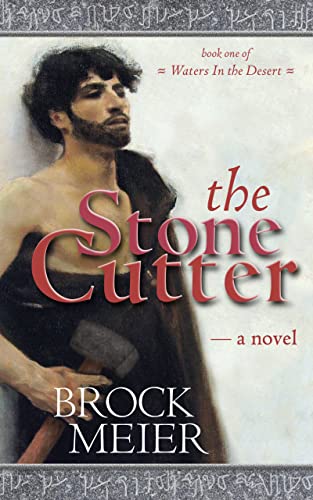
Nahor (of The Stone Cutter, by Brock Meier)

Dear readers, tonight with us is a young sculptor working the art world in the spectacular Nabataean Kingdom of ancient Arabia (you know its capital as the fabulous city of Petra). But his secrets of implication in the
deaths of his sister and mother, and his father’s abandonment, leave a
dark chasm in the flint of his heart
.


Tell us a little about where you grew up. What was it like there?

I was born near Hawara, Nabataea—a place the Greeks called Arabia. It was a few days travel south of the capital city of Raqmu, or Petra as you call it. It was one of the last stops on the caravan road from the port at Aila, on the way to the capital, and finally on to the port at Gaza. From Gaza, they shipped luxury goods—incense, silk, and gemstones—to the rest of the world around the Great Western Sea.

Any memories of childhood?

I loved roaming the rocky white hills beyond Hawara, and swimming in the cool waters of the town’s underground cistern—when no one was looking. And I recall times of joy I spent with a girl about my age—Qainu. At the tender age of seven, I thought I might marry her.

But the place holds bitter memories as well, since I was implicated in my younger sister’s death, and later, that of my amma. And for that reason, my abba abandoned me in Raqmu/Petra, leaving me in the care of a stranger. But that man became a better abba than the one who sired me.

What did you first think when your father abandoned you in Petra ?

I couldn’t really imagine that he was abandoning me—in a city I’d never known, and to a man I’d never met. I could not grasp that I would never see my family again. I don’t think my mind, and my heart, could face the terror of that reality.

What do you do now?

I was on the fast-track of the art world in Raqmu, as protege of the famed sculptor Aslah—the man who was my foster abba. He instructed me well, and also said I had a gift like none he’d ever seen. But that all came to a horrendous end one day at the stone quarry. The collapse of a rock wall crushed him to death, and caused grievous injury to my right hand. I not only lost the ability to excel at my craft, but lost the man I cherished as my abba.

I then went on a quest to find something—the Shamir—that I thought might resurrect my career. It was said to be a powerful, but mysterious object, buried beneath centuries of myth. It took me to the very ends of the earth. And the cost of this quest grew far more than I could possibly imagine.

Continue reading “Nahor (of The Stone Cutter, by Brock Meier)”

Silas Dryden (of Rescuing Her Knight, by Rosie Chapel)

Dear readers, tonight we’re hosting the villain of the piece. A shady man, intent on revenge, is prepared to sabotage the happily ever after between a lady and her long-lost knight… permanently.


Tell us a little about where you grew up. What was it like there?

Silas shuffles in his chair: Not sure as anyone’d wanna know. Rookeries is pretty grim. Poverty, overcrowding, nuthin‘s yer own, death, disease, you name it. Was all I knew fer a long time, mind, and as nippers we didn’t much worry.

Did you have any favourite toys as a child? Any cherished memories?

Barks with laughter: Toys? Yer kiddin’ me. Toys is what the gentry has. That said, we knew ’ow ter have fun. Hide ‘n’ seek was a favourite. Rookeries is a great place fer that, so many alleys and hidden corners, abandoned buildings, better still, down the docks. Got ter know it like the back o’ me ’and, I could walk it blindfold. Just ’ad to watch out fer the Runners. Oh yeah, we used ter see who could get the farthest on the back of an ’ackney afore the driver kicked us off. Nickin’ coin pouches… now, that was the best. Them nobles is easy pickin’s. Aye, we ’ad a lot ‘o’ fun. Yer make do, see. 

What do you do now?

Silas puffs up his chest: I am a businessman. I have an office an’ everything. Yer could say I’m in the service industry. I got several… errr… enterprises on the go at the moment, successful they are, I’m raking in a good profit. I have an ’andful employees who know which side of their bread has jam on it. If yer get me drift.

What can you tell us about your latest adventure?

Silas steeples his fingers. Hmmm… now that’s a bit of a tickler. See, I had this partner, one ‘o’ the gentry, a viscount he was, but ’e tried to double cross me. Nobody doubles crosses Silas Dryden and gets away wiv it. Dunno what was goin’ on in ’is noggin (Silas shakes his head in bafflement). Anyhow, I had to deal wiv it. ‘E shan’t be bovverin’ anybody ever again, and that shoulda been an end to it. Regrettably, of late there’s been some unsettling incidents, yer know, them too close for comfort moments, and I reckoned someone had been tattling. I needed ter get ter the bottom of it.

Continue reading “Silas Dryden (of Rescuing Her Knight, by Rosie Chapel)”

Victoria & Friedrich (of Under His Spell, by Luv Lubker)

Dear readers, tonight we are hosting a royal couple, the Princess Royal of UK and the future emperor Prince of Prussia. Known as Vicky and Fritz, they are here to tell us about life and love across 19th century European courts.


In tonight’s double interview we separately ask Fritz and Vicky, who are husband and wife, mostly the same questions — but they can’t see or hear each other’s responses.

Tell us a little about where you grew up. What was it like there?

Vicky: Dear Windsor is the home of my heart, and though Buckingham Palace is where I was born and lived a good deal of my earliest years, Windsor is where my happiest childhood memories live and is where we spent our honeymoon. My memories there of my childhood are among the happiest of my life – but happy in a different way than my life with Fritz – all my dear siblings and Mama and Papa were always there. Buckingham Palace is not a Home – it is a Palace, and is not very welcoming to little people.

Fritz: The Neues Palais was where I was born. It was a huge place, but I only knew a very small portion of it – the nursery – and my parents moved to Babelsberg before I remember very much. Babelsberg is a pretty place – but not… it was my home, but I didn’t love it.

What are your happiest memories of your childhood?

Vicky: My dear parents birthdays were always wonderful affairs in my eyes, with all of us children waiting outside the door with our drawings and things, and Mama in a pretty new dress when she came out, and Papa welcoming us all so lovingly. The Great Exhibition was one of the grandest events and is, of course, one of the dearest memories looking back, when Fritz was there and was always so kind. Papa’s loving advice during our lessons, which I treasured up and remember so well now…

Fritz: Happy memories? *sigh* My least unhappy memory of my early childhood was… perhaps Lotte’s birthday parties. I was always allowed to go to them and she was always kind to me, as was the Queen, Aunt Elise, who’s ward Lotte was. Later, our time in Mainz was not particularly unhappy, but… my childhood was not a happy one, I always wished myself out of the world. *Sighs and looks away.* I… I still have such thoughts, at times, when I am away from home – away from Vicky…

You are the Crown Prince and Crown Princess now. What does that mean for you? How does that change your life?

Vicky: Fritz’s being the Crown Prince means he has more duties, which he fulfills faithfully. We shall be the next King and Queen, some day, and perhaps, Emperor and Empress. We work steadily towards the dream of bringing into existence a peacefully united Germany. But it means we often have less time together, which of course is not particularly pleasing.

Fritz: Since I have become Crown Prince, I am required to be present at the Crown Councils. One might think this is an honor, and it is, but… to be a witness to some of the things which go on is unendurable. And Papa requires me never to speak at the Councils, so I am not a part of it, only a tacit witness they think they can control.

Continue reading “Victoria & Friedrich (of Under His Spell, by Luv Lubker)”

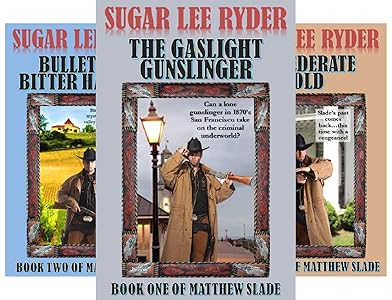
Mathew Slade (of Gaslight Gunslinger, by Sugar Lee Ryder)

Dear readers, tonight with us is an ex Pinkerton Agent turned detective and gun for hire. He’s here to tell us about the 1870’s Wild West, and of how a gunslinger used to open plains and prairies can deal with the criminal underworld of a crowded metropolis.


Tell us a little about where you grew up. What was it like there?

I grew up on the prairies of Nevada. It’s a dry, dusty sort of place. My family moved to Virginia City where my father got a job in the mines during the Comstock silver strike. As soon as I was old enough to hold a rifle, I honed my tracking and shooting skills killing varmints around Virginia City. People in those days didn’t care about the pest control, so whatever I bagged went into the pot.

My father was killed in a mine accident. He’d gotten us into debt, and mother and I still needed to eat and a place to rent, so I took a job as a wagon guard for the silver shipments. People who’d fallen on tough times or slid face first into the bottle were everywhere in a mining town. I got more practice with my gun than I care to admit before I left that town behind.

What made you leave Virginia City?

Mother caught the fever and after she died, I had to leave town to avoid payin’ off the rest of my father’s debt and caught the first train out of town. I ended up in Springfield, Illinois and since I needed to keep body and soul together, I lied about my age and I enlisted in the Army.

I looked as green as grass but shooting skills were in demand due to the start of the Civil War. So when I told them I was 18 they believed me.  I ended up 6th Illinois Cavalry under General Nathaniel Banks. I saw combat, I saw ‘the elephant’ as we then called it. Dreadful, just dreadful. I don’t want to talk about what I saw during the war right now.

All right, then. So what brought you to the current place in your life?

After the Civil war I joined the Pinkerton Detective Agency. First job I really liked, so I spent several years becoming the best agent there could be. Until my last assignment, where I was assigned to track two young women heading along the Oregon Trail to San Francisco.  

Turned out that Samantha Williams and Charlotte Hart were two tough young ladies, gave me a hell of time finding them. Hell of a job – I had to bring Samantha back to an abusive father. Idiot only wanted to marry her off like a damned cow.

Wild Bill Hickok was travelin’ with the two. He told me flat out what a lousy job I had. And when a legend of the West tells you that you’re in the wrong, you plain just listen. A year or two later, I quit Pinkerton and decided to head to San Francisco, where I am now.

Continue reading “Mathew Slade (of Gaslight Gunslinger, by Sugar Lee Ryder)”

John Conquer (of Conquer, by Edward M. Erdelac)

Dear readers, tonight with us is a P.I. from 1976 Harlem — the cat you call when your hair stands up, a supernatural brother like no other.


Tell us a little about where you grew up. What was it like there?

I was born in New Orleans but came to New York with my parents when I was seven. We stayed with my Uncle Silas till he passed. I was raised on West 115th in the Foster Projects in Harlem. They call ‘em the MLK Projects now. It was cool growing up. We had the big playground, monkey bars, ball courts…good old PS 170. When my daddy died and my mama got run down by a taxi, I stayed with Consolation Underwood in East Harlem. She was a bookie for King Solomon Keyes, and an Ifa priestess – an Ìyánífá. She taught me divination with the opon Ifa, had me memorize the 256 odu, while other kids were doin’ times tables. Said ‘cause I was born with a caul I ought to learn, maybe become a babalawo some day. She was Mama to just about every orphan in Harlem at one time or another. Always some kid coming or going in her kitchen. Me and her niece, little Phaedra Williams were the ones who stayed the longest. I used to walk Phaedra over to the pool at Marcus Garvey Park in the summer, stand under the monkey bars to catch her if she slipped. That was before ‘Nam.

Did you have any favourite toys as a child? Any cherished memories?

We couldn’t afford much in the way of toys. Played outside most of the time. One of my favorite memories is of sittin’ up late with my Daddy and my Uncle Silas beatin’ on these handmade mahogany Rada drums he had. My uncle taught me to beat the rhythm on the Boula when I was six. My mama would dance till the sweat made her arms shine in the dark.

What do you do now?

I’m a private investigator now, got an office on 33 St. Marks Place. I run down stray husbands and wives mostly, but sometimes folks call me when the hair on the back of their neck stands up, you dig? I got a reputation around town after I took down a rakshasi one night at the Empire Roller Disco in Brooklyn. Brought it in a lot of weird business. Weirder by the day, sometimes I think. Lucky I inherited a library from my godfather, Fish Marmelstein. He used to own a supply company, Brother Hoodoo. My daddy was his top salesman. Anyway, it’s got most everything I need. I got books on Vodoun, Hoodoo, Kabbalah, Hermeticism…you name it. And if I don’t have it, I know where to find it.

What can you tell us about your latest adventure?

Well, I wouldn’t call it an adventure. Adventures are supposed to be enjoyable, right? Where do I start? It’s been an eventful year. I took down a clique of vampires in the Harlem Hospital morgue, helped out my Uncle Silas’…..I don’t know what you call Verbena Mechant, a partner? Husband? Wife? Hell, you call her whatever she wants to be called. I learned that the hard way. Anyway, Auntie Verbena had a boo-hag causin’ problems with her girls in Crown Heights. Let’s see….there was that time Lou Lazzeroni found Genie Jones shrunk and floating in a lava lamp and called me in….there was that thing eatin’ graffiti taggers in the subway. Then there was that other thing running rampant at the Vatican…sorry, that’s what Pope used to call the apartment building where he housed his girls….ugh…sorry, Pope’s the pimp whose ghost haunts my car….eh, that’s a long story. I don’t wanna get into that mess. Let’s see….my last ‘adventure’….finding the dude who shot Preacher dead with an arrow in front of Hekima Books. Preacher, that was Benny Galarza, one of my oldest friends. We started the 167th Street Black Enchanters back in ’69 when we got outta Vietnam see….him and me and Black Adam. It had to do with a butchered gorilla carcass the cops found laying in an intersection in the Bronx. I just got out of the hospital from all that. It was a bad scene. Nearly got my black ass pitched off a roof.

Continue reading “John Conquer (of Conquer, by Edward M. Erdelac)”

Miss Bennet (of Death of a Clergyman, by Riana Everly)

Dear readers, tonight with us is a character out of Jane Austen’s novels, who found that life continues beyond her original appearance. She is here to tell us about love and murder during the Regency.


Well, Miss Bennet, you have had an interesting little adventure. As magistrate in these parts, I need to gather a bit more information to write my report. It is not every day that a young woman of your tender years solves a mystery like this, and the murder of a clergyman as well. We were all quite shocked. I have a few questions, if you do not mind. First, I need to know a bit about you. Your home, for example. 

Thank you, sir. Of course I will answer anything you need. My home is a small estate called Longbourn, in Hertfordshire. It has a small village, but the closest town of any size is Meryton, a mile yonder. I suppose it is not so different from many other market towns, and we have a good selection of shops and necessary provisions, as well as a fine set of assembly rooms. We lack for little, and in this modern age (for it is 1811, of course), we can travel to London in the course of half a day.

Your home sounds not out of the usual, but there must be something that has formed you into the person you are. What of your childhood? What has shaped you to be able to solve these horrid crimes?

I cannot imagine myself anything particularly special. Indeed, I grew up thinking myself not special at all. I am the middle of five daughters, after all. I am not pretty like my two older sisters, nor am I spirited and outgoing like the younger two. I would rather read then attend parties, and I have little interest in ribbons and lace or flirting with the officers from the milia regiment. I quite often feel rather invisible!

As a child, I retreated into the comforting words of scripture and sermons. They helped me make sense of the world and shaped my sense of morality. A young woman’s behaviour reflects not only on her, but on all her relations, and must be well regulated.

I also sought refuge in the pianoforte. I begged Papa to allow me to learn, and I had a great desire to become proficient. Perhaps, if I could play the most difficult pieces, people would pay attention to me and laud me.

I know not whether these shaped me, but perhaps they gave me the discipline to examine the clues I found so as to solve the mystery of Mr. Collins’ murder.

What do you propose to do now? Surely solving murders is not an appropriate activity for a gentlewoman of your tender years. Will you return to playing the pianoforte?

Oh no, sir! I can hardly credit it. It was a grand adventure, but you are correct. I am expected to act within my station, and with all propriety.

And yet I find the whole affair was stimulating. I should never wish to see such violent death again, nor do I rejoice in the cause of the investigation, but I have never felt so useful before in my life. I have never felt so needed, so important, so alive. I know I should be pleased to have this experience to remember in the years to come, and yet a part of me hopes that it might not be the last time I can put my meagre skills to work for so useful a purpose.

Very good. I shall make notes of all of this. Now, on to the crux of this interview. Here I must make good notes for my report. What can you tell us about these terrible events?

Oh, sir, I shudder even now to think of it. It started, as you know, when my cousin Mr. Collins was discovered dead in a field near Longbourn. He had been killed with a knife, and that knife turned out to belong to my sister Elizabeth. She had been out on the day Mr. Collins died, and she returned home injured and covered in blood. This, when seen with the evidence of the knife, brought her to the attention of the local authorities, who came to charge her with the death.

Of course, I could not let that happen! Elizabeth could never kill anybody. I knew I had to do whatever I could to save my dear sister. Then there were the missing candlesticks and the lost maid, and I found myself in the middle of a great mystery that needed solving.

Continue reading “Miss Bennet (of Death of a Clergyman, by Riana Everly)”

Create a free website or blog at WordPress.com.

Up ↑