

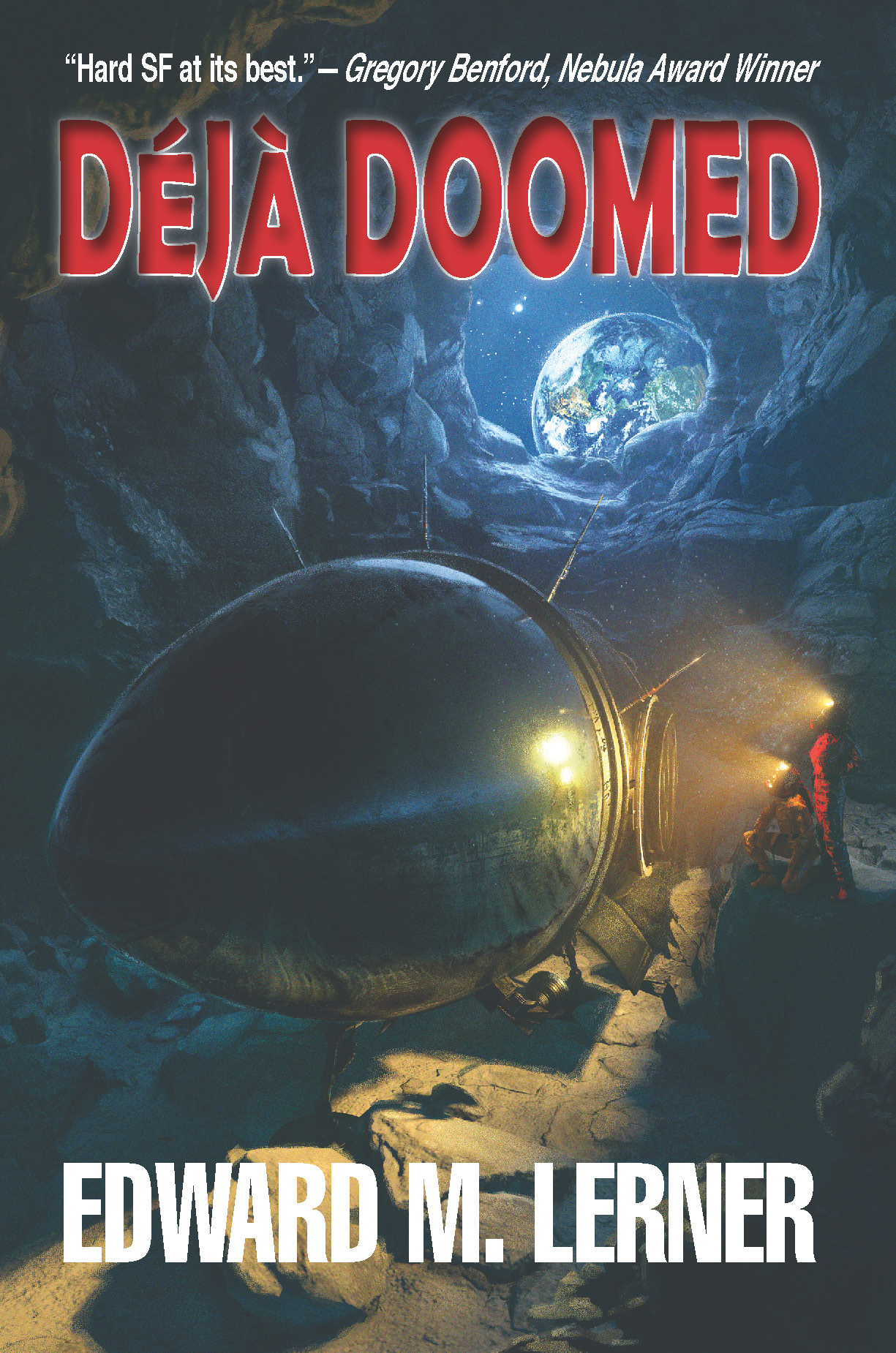
Dear readers, tonight with us is an astronaut, speaking about the second cold war in the near future and the race to Mars between the US, China, and assorted billionaires.
Tell us a little about where you grew up. What was it like there?
I was an Army brat, so you name it. A half dozen places in the US. All across Europe. Once Japan and twice Australia. I can mispronounce words and mangle syntax in five languages. Apparently I speak French and German like an Alsatian, which is an insult from both sides. Ask me if I care.
Anyway, the first few moves taught me not to get too attached to places – or to people. Don’t take that to mean I’m some kind of loner, because I also learned to make friends quickly. Having friends around the world? That’s seriously cool.
As odd as the lifestyle seems to most folks, it’s what I knew. Straight out of high school, I enlisted. Already then I’d had my eye on going to space, and any of the services would pay for an engineering degree. Becoming a pilot was the logical first step and the Air Force, by far, has the most pilots of all the service branches. You don’t want to know how Dad took it when I joined the Air Force. He coped better with the move to NASA.
What do you do now?
Commander of NASA’s international Ares mission to Mars. Pilot of Meriwether Lewis, one of the mission’s pair of spacecraft. The second ship, of course, is the William Clark.
Anyway, that’s what I did until … well, best I not say.
What can you tell us about your latest adventure?
Only insane people would think to throw together a crewed mission to Mars in less than two years. Those, unfortunately, are the people I work for. After President Wu announced a mission to Mars, no way was our president willing to let China get there first.
Speaking of lunatics, well, then there’s my unofficial overseer. More than anyone, Xander Hopkins was the architect of our mad dash. It serves Xander right that the prez plunked him into my crew to be her eyes and ears. Even if – eventually – he became a good friend.
What did you first think when you got to Mars?
Technically speaking, I didn’t. I got us safely to its moon Phobos. From Phobos, we dispatched an armada of robots to explore the world below. Because to actually set boot on Mars would have massively compounded the challenges – challenges which the other guys discovered all too soon.
At way less than one light-second’s round-trip comm lag with the surface we had real-time control of all those bots. We could, and did, cover lots of ground. Drilled lots of exploratory holes. Flew everything interesting up to our Phobos base for closer examination.
You know what? Forget the party line that from Phobos we were responsibly searching for Martian life. That we posed no risk of contaminating it – if it was even there – with earthly microbes. I wish to God we could’ve flown those last few thousand miles. Instead, we had Mars ever overhead. Like a mottled red dinner plate hanging in the sky. Looming. Taunting.
What was the scariest thing in your adventures?
Setting aside That Which Cannot be Revealed Without Spoilers, there’s still much to choose from. I’ll go with the landing on Phobos because landing is such misnomer. Phobos is basically a potato-shaped rock. Its longest axis is scarcely 16 miles. A rock that small has no gravity to speak of. You don’t actually land there. You very carefully dock with it – only there’s no docking mechanism to engage.
What you do is, you harpoon the damned potato, then slowly reel yourself to the surface. No one knew for certain till we arrived that’d this could even work. Would harpoons bounce off? Would their impacts spatter us with rocky debris? What if any of our tether reels froze at the last moment? What if tethers tangled? Coming down askew, not squarely on our landing feet, could’ve bashed in something critical and stranded us.
Surrendering control to a damned computer and glorified garden-hose reels is no pilot’s notion of a good idea. Scary as hell, in fact. Not that, in front of crew, I ever said any of that. But, okay, in the end, the landing worked as planned. We did get down in one piece.
What was the worst thing about living on a spaceship?
Had you asked me about any previous mission, I’d have said the crowding. Spaceflight is like a bunch of people living together in a closet. Or maybe I’d have said the smell, for pretty much the same reason. But those previous flights were to Earth orbit, or lunar orbit, or to the Moon itself – in every case, for just a few days.
The flight to Mars took six months! You can’t help but get used to the crowding. It’s that or go psycho. You can’t help but become immune to the stench. Which leaves … the people themselves. You can’t get away from them – or them from you. You can’t not get on one another’s nerves from time to time. Sure, the psychologists had had their say. They’d declared us compatible. As if they had any clue what it’s like.
Aboard Lewis with me were the aforementioned Xander, the mad genius behind our crazy mission plan, and the uptight Canadian flight surgeon, Sonny Ying. We were at times, despite our best efforts, like cats and dogs. Or maybe oil and matches. And utterly dependent on one another.
What is the best thing about it?
As it turns out, Sonny. She and I developed … a thing. Which, I’d hafta guess, became the worst part about the flight for Xander. There’s not a lot of privacy in a closet.
Whom (or what) do you really hate?
Xenophobe paranoid nutcases. They don’t want us to go home! In the name of protecting Earth from some imaginary Martian plague, the so-called Planetary Protection League is already a sort of plague on Earth. Damned Luddites.
Edward M. Lerner worked in high tech and aerospace for thirty years, as everything from engineer to senior vice president, for much of that time writing science fiction as his hobby. He is the author of sixteen SF novels (five of them collaborations with Larry Niven) and dozens of shorter works. His 2015 novel InterstellarNet: Enigma won the inaugural Canopus Award for fiction “honoring excellence in interstellar writing,” while other of his works have been nominated for Locus, Prometheus, and Hugo awards. He also writes popular science, notably including Trope-ing the Light Fantastic: The Science Behind the Fiction.
You can find Cat on the pages of Life and Death on Mars.
Browse our archives for past interviews, or follow the site by email (bottom-right) to know immediately when your new best-book-friend makes an appearance.
 The Protagonist Speaks
Recent Comments