Search

The Protagonist Speaks

Interviews with the characters of your favourite books

Author

Assaph Mehr

Felix the Fox is a failed magician (not his fault he couldn't pay tuition and got thrown out), a discharged legionary (honourably discharged - even if the dice were loaded), and a full time investigator of crap no one else wants to touch. Assaph is just the guy putting words on paper for Felix.

Rez Cantor (of The 5 Moons of Tiiana, by PT Harry)

Dear readers, tonight with us is an interstellar captain facing an unimaginable crisis. His daring rescue of the Princess of Melela from the clutches of the alien-hybrid Relcor should have been a triumph. Instead, an unforeseen catastrophe leaves him injured and stranded on an alien moon, with no memory of how he arrived. To make matters worse, a deadly alien cloud looms overhead, threatening his life.


Tell us a little about where you grew up. What was it like there?

I was born on the planet Barsin, but I moved to Melela with my parents at the age of three. My father was a military officer assigned to the Diplomatic Corps, where he later became the personal attaché to the Emperor. My mother was a professor at the Melelan Medical Academy.

My upbringing on Melela was stereotypical, though I did have issues with my father. He was away on missions for the Emperor, and my mother raised me. She was a kind soul, but like most undisciplined boys, I gave her a hard time. This led to my father enrolling me in military school at ten. Oddly enough, I took to it like a duck to water, though my classmates plagued me for my inherent entitled privilege.

After graduating at eighteen, I joined the Shadow Guard, an elite military unit assigned to protecting the royal family. My duties were standard fare initially, but I eventually worked myself up the ranks to become a Captain. During this tenure, I caught someone trying to fondle the Emperor’s daughter, which I prevented. The result sealed my fate as I was commissioned to permanently oversee the Princess’ safety. Little did I know then how much this would affect the rest of my life.

Did you have any favorite toys as a child? Any cherished memories?

I can’t say I had any real toys, per se, but I did love knives and swords. I think this was my way of emulating my father. He was a soldier’s soldier, and I always felt the need to win his respect, so excelling at martial arts and weaponry was a constant thing. I do remember slicing up the drapes in my room while practicing one day. I cut them to shreds, and my parents were not happy.

What do you do now?

My life today is very different. I am no longer the swashbuckling hero who saved the moons of Tiiana. Today, I am helping to rebuild our planet, Melela, alongside the Princess. The Relcor decimated our world, as they did the Empire. Things will never be as they were, but we need to move forward. Getting our planet rebuilt is a full-time job, as there are others who wish to rule. And there are faint rumors that Juc T’Krola may have survived Giragoc. If this is the case, we need to be ready.

What can you tell us about your latest adventure?

My most recent adventure was running into Penta. The young seductive survived the bombing of Corin and eventually became a resistance leader. Our initial meeting almost brought us to blows before we realized who we were. Though we are not always on the same page, both of us have the future of Melela in mind, and I look forward to collaborating with her.

Continue reading “Rez Cantor (of The 5 Moons of Tiiana, by PT Harry)”

Celeste Bradford (out of The Bureau of Society Betterment, a short story in It Takes A Village Anthology, by Anaïs Chartschenko)

Dear readers, tonight with us is the protagonist from a Utopian world, where everyone lives on massively tall monolithic buildings, and social status is determined by literally how high up you live. She is here to tell us about her world, about moving between levels, and encountering an agent that governs the building.


Tell us a little about where you grew up. What was it like there?

I was born and raised in a monolith. It has a tall center with multiple branches of pods extending from that. Escalators at either end run the entire length of the core. They have stops at each level, with latrines placed conveniently close to the exits so that you don’t have an accident when traveling long distances.

I was not quite lowlith, but not far off, which meant the first pod I remember was slightly below the mid levels. There aren’t as many windows there, but there are a few. I spent quite a few nights sneaking out for a moment at a window. The sky at dawn is particularly beautiful, as it splashes colour against the pale grey walls of the halls.

The left side of the mid pods were mainly used for agriculture. The right is for processing them. I can still remember the smell of compost, which reminds me of why I work as hard as I do. The children’s ward was directly below one of the lower levels of the mids, and while I’ve been told smells rise, this one definitely rose and fell like some sort of decaying cloud.

Did you have any favourite toys as a child? Any cherished memories?

I have an abacus from the children’s ward. I wasn’t supposed to take it, probably, but I don’t think it was missed. The other children were more interested in baby dolls or ball and sticks.

I wanted a grown up doll that looked like one of my first carer’s Ms. Renton. She was so incredibly beautiful I used to imagine she was an Elite.  I was informed by the Matrons dolls with breasts were out of the question. Apparently they needed to protect my morals. Strange, since half the monolith has them.

I’m getting off track. The abacus. It was brought by my second carer, Mr. Dirby. He taught me to count, which was a joy to me. Everything could be ordered, and that calmed me down like nothing else could. I looked forward to Mr. Dirby’s hours.

Of course, he had one look at Ms. Renton and ruined everything. They both transferred out of the children’s ward. Heard they are together to this day, with their brood of non-orphans to watch over. The bright side is he forgot his abacus. When I aged out, I smuggled it under my coat. I keep it on my desk.

On to your next question… Well,  I’m an orphan raised in a sea of wanted children. Few cherished memories. Let me think. I liked the pudding I had once at one of the other kid’s birthday party! I don’t know what the flavor was exactly, but it was the first time I’d had anything that sweet.

What do you do now?

In my current job, I run numbers. Funny how that worked out! I try to keep things running smoothly. Always learning more about people around me. Information is power, another motto. But I’ve done it all! Laundry, peeling vegetation, turning compost, assembling gadgets and do dads, minder of children, secretary, dispatcher, seamstress… There’s more, but I can see your eyes glaze over at the monotony of the list. Believe me, mine did too.

What can you tell us about your latest adventure?

Know what I just said about eyes glazing over? It was noticed.

I was about to move to a higher lith level. I was literally in the middle of a tour with a real estate agent when I found out my account had been tampered with. The apartment was denied even though I had the CAVES! You can imagine how that felt… no. Perhaps you can’t. There is no graceful way to say I lost it.

I only go to the Bureau of Society Betterment under duress. Endless forms and the fear of reassignment if they decide it suits. Did I mention the whole place drives you mad because there is absolutely nothing besides bureaucracy to look at?

Continue reading “Celeste Bradford (out of The Bureau of Society Betterment, a short story in It Takes A Village Anthology, by Anaïs Chartschenko)”

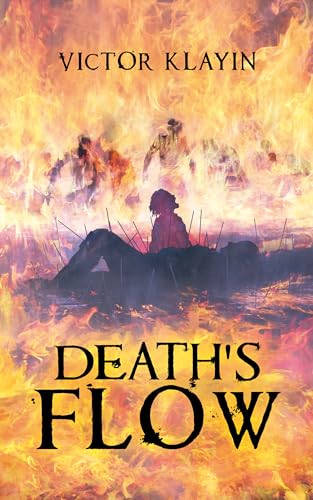
Arneth (of Death’s Flow, by Victor Klayin)

Dear readers, tonight we publish an in-world interview between two characters, a noble woman who wants to know more about one of the protagonists. They speak of scholars and warriors, of calculating the future and fate.


So… mister… Arneth, is it?

Arneth Farhan, your highness. May I ask what’s the purpose of this interview?

I was told a member of the Daht’Gahren was seen in town, and I wouldn’t pass up the opportunity to know if you monks are for real, or if you are all just an act.

I am, ever, at the countess’ disposal.

Really? I couldn’t tell. You don’t look like a scholar monk, more like a swordsman yourself.

Indeed. My martial prowess comes from the time I worked with my father, as a caravan guard. We would always accept contracts for guarding merchant caravans, and thus from an early age I’ve been familiar with numbers. That would prove to be very valuable later on.

And how does a caravan guard becomes a Daht’Gahren?

Slowly, your highness, as it is with all students. Since I learned of the Daht’Gahren I have been attracted to the promise of their life. When my father had accrued enough means to pay for my tuition, I journeyed to Verian Tower in search of apprenticeship. I was twenty then. When I graduated, I was thirty-five.

And how was it, living in the tower of the Daht’Gahren?

Both demanding and rewarding in extreme measures. You may have noticed my… pointed lack of body hair. Every Daht’Gahren trains memorization and fast calculus to such an extent that the stress alone causes all of our hair to fall. For our graduation exam, we each have to commit an entire library to memory. And yet, what we gain is… unfathomable. I learned to read peoples’ minds just by analyzing their body language, and to calculate the future of nations.

That’s… impressive, if not preposterous. How can anyone withstand this?

Many don’t. Of every thousand students, only one graduates. It is never easy for anyone. I remember the sleepless nights spent studying, the oral exams that seemed designed to be impossible… I doubted myself for a long time, as I apprenticed, alone with but a mountain of books for company.

Surely there must have been something to look up to?

Yes, but it is hard to put it to words. Our teachers would make practical demonstrations of the knowledge they taught us, recite entire books from memory, read our minds in the middle of a class, things like this. However, what drove me most to study were the alternate calculations. They would show us, mathematically, how much worse off our world would be if this or that person hadn’t finished their studies. It is impossible for me to convey right now just how important each and every life is, and the difference every single person makes when they have knowledge, and the will to act.

Continue reading “Arneth (of Death’s Flow, by Victor Klayin)”

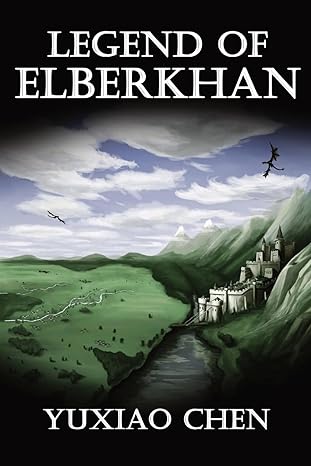
Rudi (of Legend of Elberkhan, by Yuxiao Chen)

Dear readers, tonight with us is an elderly tree elf recounting an adventure from his youth. He’s here to tell us about befriending a human, and their adventures that followed.


Can you tell the readers a bit about yourself?

Oh hi, I’m Rudi, I’m a tree elf, and I’m the author of Legend of Elberkhan. Yes, yes, I know you thought it was written by Yuxiao, but tell me, if it weren’t for me, how would she know the story? I was there. It was a long time ago, but I was THERE!

I am 777 years old. Now don’t look so shocked, that’s just rude! Ok, fine, I am pretty old, even for a tree elf. I still have my charm though, ahem… Anyway, as I grow older, I’ve been thinking more and more about the adventures from my younger years, of which one particularly stood out.

The story happened when I was 112, when I first met Aary. I remember every detail of it, as if it all happened yesterday. I was just a boy back then, like him… What are you laughing at! I was!

Apologies (putting on a straight face), so how did you two meet? I know it’s explained in the book, but can you briefly talk about it, without giving away too many details, for those who haven’t read the book yet?

Sure. I was just elfing around in the woods, you know, catching rabbits and other delicious treats. It was near my home tree hole, somewhere on the side slope of the Soulkeeper Mountain. Actually, it was not very far from the Castle of Elberkhan, but far enough away from the dangerous humans, or at least I thought it was. Well, not that I thought that all humans were dangerous. After all, my father was a human. But I always knew that some of them loved violence, they fought each other to obtain and keep things that they didn’t really need…

Sorry I’ve gotten a bit carried away now, haven’t I? Where was I? Yes, I was elfing around in the woods, minding my own business, and that boy snuck up on me! Caught me by surprise! He made me lose a very fat rabbit, I still haven’t forgiven him for that. I was scared out of my wits. I really thought he was going to eat me!

And what did you think about Aary when you first got to know him?

Well, he was kind, and brave, pretty eccentric, but nonetheless a good kid. Who can blame him for being a bit… strange, really, with all the terrible things he’d been through and all the suffering he had to endure almost constantly, all at such a young age. I don’t want to sound old, like I said I was just a boy myself, but I did have almost a hundred years on him.

Almost from the start I felt that he was hiding something from me, or maybe he was even hiding it from himself. I didn’t want to push him too much, you know, but personally I don’t believe that holding secrets is good for anyone.

Tell us a bit about the story of your book. Again, without spoiling it for the readers who haven’t read it.

Well, when I look back on my 777 years of life, that year was easily the most exciting one. Meeting Aary completely changed my life – from an ordinary tree elf whose only concern was the next meal, to what I am now, a well-respected advisor and the author of a book!

It was lifechanging for him too, meeting the most important girl in his life, having scary encounters with fearsome beasts that almost cost him his life, and discovering all those secrets about himself and the king… Oh, not to mention the big war at the end of the year. Phew, I’ve never seen anything like that before or since! Oops, am I giving too much away? Sorry! I got carried away again!

Continue reading “Rudi (of Legend of Elberkhan, by Yuxiao Chen)”

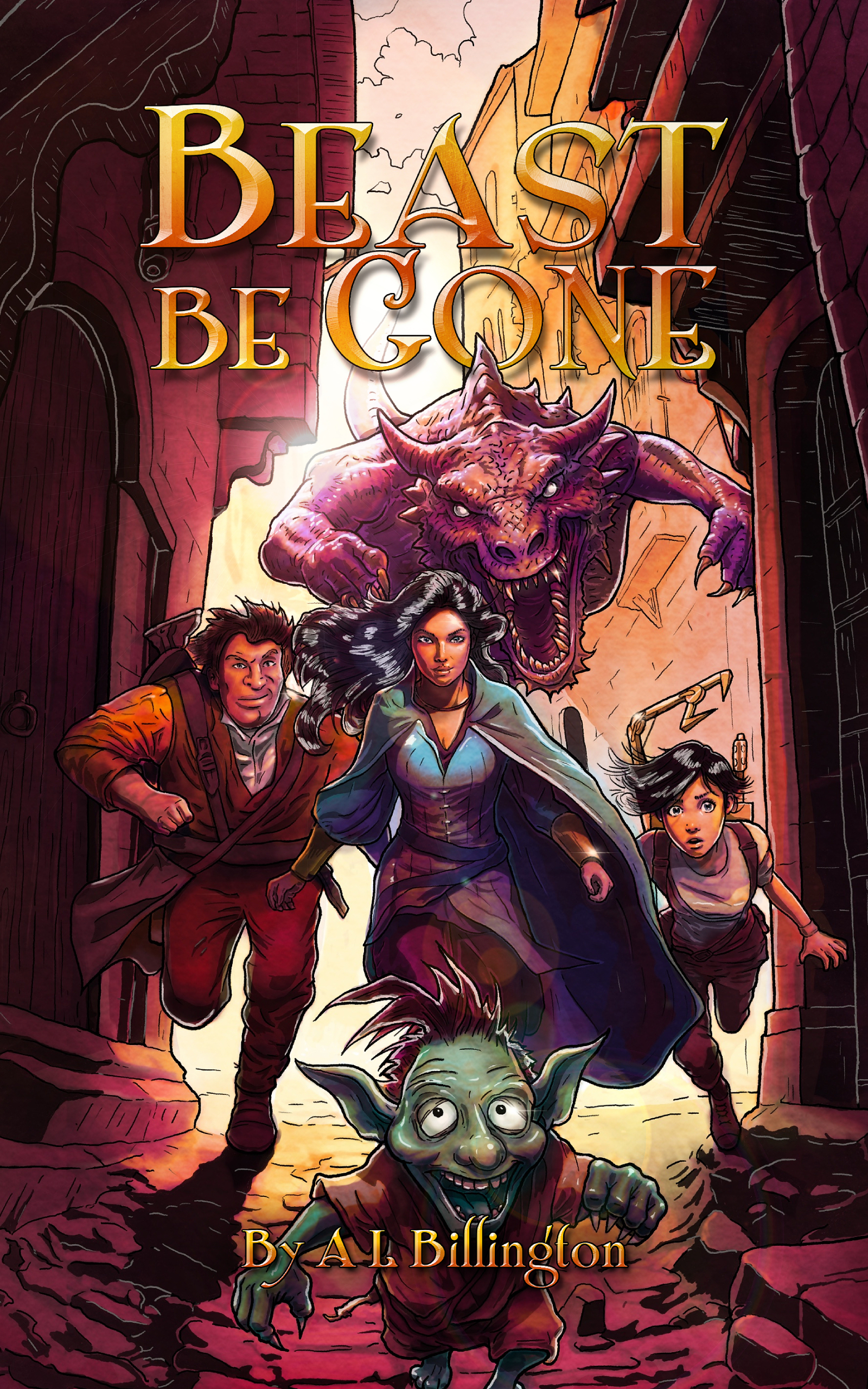
Squee (of Beast Be Gone, by A.L. Billington)

Dear readers, tonight we were scheduled to interview the owner of a renowned pest-control service, who helps citizens deal with creatures in their basements, undead haunting their castles, and infestations of goblins and other annoyances (all at better rates and kinder service than rampaging adventurers). Well, we were aiming to — but someone else showed up!


Hello, nice to meet you Eric. You’re a little… shorter than I expected.

Oh, sorry. I’m not Eric. He, um couldn’t make it. There was an emergency. Some oozes have infested a school, and the headmaster needed them out before the human children got back from their holidays.

Right, I see. And who are you?

I’m Squee, Eric’s Apprentice. Nice to meet you.

Are you a…?

A goblin. Yes. Sorry about that.

Please don’t apologise. I’ve just never met a goblin before.

Oh really? That’s odd because there are an awful lot of us. I suppose you don’t go into caves or hire many lawyers?

Not especially, no.

That’ll be it, then. Although goblins can be pretty evil, watch out if you see one holding something pointy. 

Noted. So you work for Eric at Beast Be Gone, Pest Control?

Yes! He’s been my master for a few months now. And let me tell you, he’s the best so far – Master that is. I’ve had more evil masters than I’ve had hot dinners. At least six.

How did you get involved with so many evil masters?

It’s the only real career path for goblins. That’s what my brood mother always said, anyway. You get a roof over your head, free grub, and you get to make a difference. 

Brood mother… where did you grow up, exactly?

All goblins get birthed in a swamp, of course. On account of the dampness.

I see. What was it like there?

Damp.

Did you have any favourite toys as a child? Any cherished memories?

I do miss my brood mother’s rat pie, but besides that, I was glad to leave. Although my skin has been dry ever since. Maybe I’ll go back one day, if Eric will let me.

What can you tell us about your latest adventure with Eric?

Where do I begin? We recently defeated The Dark Master, who had taken over the continent. I’m not 100% how he did it… Eric said something about economics? Anyway, everyone was suddenly an adventurer and there were no farmers or shopkeepers or anything left. So The King got Eric to find out what was going on. Pest control wasn’t doing so well either. All those adventurers cleared the dungeons, so he had no work left. Adventurers make a big mess, you see. Pest control is clean and humane. Adventurers just murder and blow things up. Although we did have to do that to a dragon…

Continue reading “Squee (of Beast Be Gone, by A.L. Billington)”

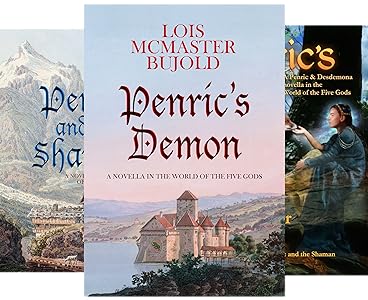
Penric & Desdemona (of their eponymous series, by Lois McMaster Bujold)

Dear readers, tonight with us is a learned temple divine and sorcerer — and the chaos demon he possesses. They are here to tell us about their complex relationship, as Penric navigates a world — and an occupation — he wasn’t prepared for, and Desdemona tries to keep him alive.


Tell us a little about where you grew up. What was it like there?

Penric: I was born seventh child of my family at Jurald Court, in the valley of the Greenwell in the Cantons.  My father was the baron there.  Someone once offended me by calling my home a fortified farmhouse, but, really… he wasn’t wrong.  Looking back, it was a rather idyllic childhood, running all over the mountains, learning to ride and hunt with a bow or traplines, haying in the summer—everyone turned out for that, from the lord on down.  Butchering livestock in the fall, which proved oddly useful later when I came to teach human anatomy to the Mother goddess’s medical students in Martensbridge. And, ah, to certain tasks in support of Des.  Not many books at Jurald Court, though.

Des, as a chaos demon of the Bastard god, how would you even answer that question?  I mean… can you remember being born as an elemental?  Is it even being born?

Desdemona: [the sense of a snort—if you can call it that in a bodiless demon]:  Of course I don’t remember emerging from the Bastard’s hell.  It’s a place of chaos.  Neither memory nor any other kind of form can exist there in the roiling white boil.  I suppose my earliest memory is of being in—or being, hardly a difference at that stage—the wild mare in the peninsular mountains of Cedonia.  Her death, now, that I remember, and jumping to the lioness that killed and ate her.  Then the first human, brave Sugane the village woman, who speared the lioness and gave me my first human language to think in.  And a fear of heights.  Then nine more women after her.  All their childhoods are but borrowed memories.  Their deaths, though… in two centuries, I had twelve deaths, and no births.  Think on that, my sweet holy necromancer.

Pen: Oh, I do.  Or you do.  It’s getting harder to tell our thoughts apart, anymore.

Des: Welcome to my world.

What did you first think when you two met?

Pen:  I was bewildered.  Nineteen years old, riding to what I thought was going to be my betrothal.  I mean, I didn’t realize this dying old woman on the roadside I’d stopped to try to help was a Temple sorceress.  I’d never even met a sorcerer before.

Des:  We thought you were the best human in range to jump to—though there wasn’t much choice in the moment.  The least rigid mind, which mattered… well, you know how much it matters now.  Incandescent wits, trapped under the stone of your benighted rural life.  Also [the sense of a slight, embarrassed cough] by far the prettiest.

Pen: [Ignores this.  Though somewhat flattered by the “incandescent wits” bit.]

What do you do now?

Pen: As a youth, I certainly never expected to become a learned Temple divine, seminary trained.  Five times over, counting my own training after I contracted Des, and that of four Temple sorceresses who had her before me.  And three times trained for a physician, mine and two learned women likewise, though that… did not go well.

Des: [snorts, but charitably makes no comment.  Some wounds do not bear touching.]

Pen: The five new languages Des gifted me with from her prior humans have allowed me much comfortable work as a translator.  Beyond that, whatever tasks my Temple superiors or my secular authorities request.  Or my god, Fifth and White.  As a sworn servant to the god of mischance, I never know what distressed persons or problems may next be given into my hands.  “No Hands But Ours”, as the motto of my Order says.   

Des:  Me, I try to keep this fool alive.  He—and the Temple and the secular lords and most of all the god—don’t make it easy.

Continue reading “Penric & Desdemona (of their eponymous series, by Lois McMaster Bujold)”

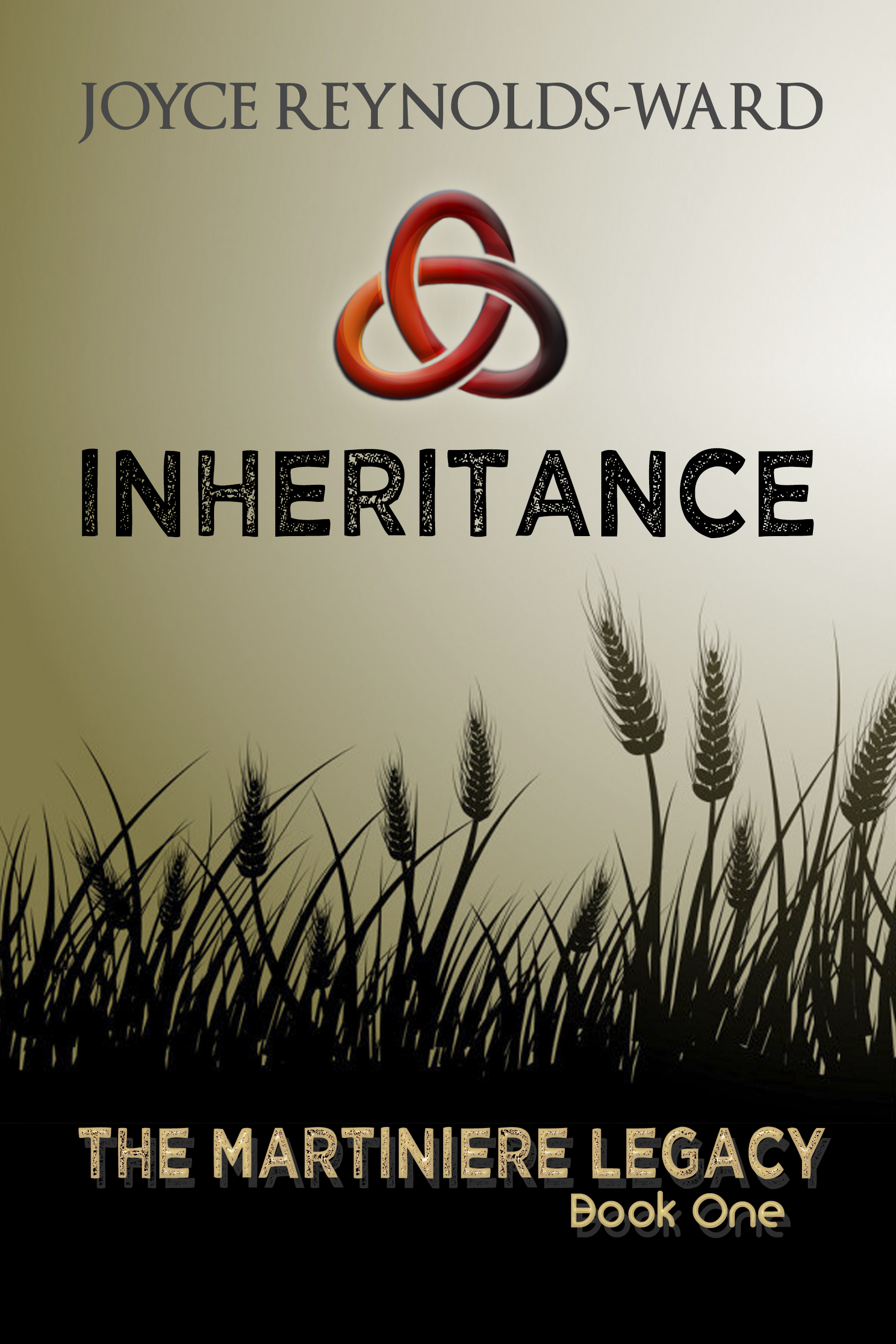
Gabriel Martiniere (of The Martiniere Legacy, by Joyce Reynolds-Ward)

Dear readers, tonight with us is a man from the near future, talking about biotechnology and the multiverse.


Tell us a little about where you grew up. What was it like there?

Before my family died in a plane crash when I was twelve, I lived in Malibu, on the beach. We also spent a lot of time in Paris, France, at one of the major Family holdings, the Hôtel Martiniere, in the 1st arrondissement. When I was ten, I was sent to Northview Military Academy in Utah, and spent school years there. After my family died, I still spent part of my time away from school in Los Angeles, only in the house of the man I thought was my uncle but was really my biofather, Philip Martiniere. Philip’s house was in Beverly Hills and a very different setting from my family’s house. Otherwise, I was in Paris with my uncle Gerard, learning more about the Martiniere Group’s financial operations.

As a child I spent a lot of time outdoors. My parents would take my sister, my cousins, and I out to Anacapa Island where we would spend the day swimming and snorkeling. I played on the beach. When I was very young, I wanted to become a cliff diver.

In Paris, I prowled the city with my cousins. Doing what kids do, but we also spent a lot of time visiting museums and attending cultural activities.

Did you have any favourite toys as a child? Any cherished memories?

Growing up Martiniere had a lot of expectations, especially since I was born into the ranks of the high-level heirs and was being nurtured and cultivated for a leadership role in the family-held conglomerate, the Martiniere Group. I didn’t have any one favorite toy because I spent a lot of time playing with my cousins, whether in Paris or Los Angeles. And memories…ah, best not to go there. My teen years were nightmarish. One of my biggest regrets was that I was horrible to my little sister Louisa and my mother Angelica the last time I saw them alive.

I did have a collection of Marvel action figures and assorted drone and robot models. Who was my favorite Marvel character? Tony Stark, of course. In many ways, I’ve been emulating him, only through development of agricultural technology.

What do you do now?

I am currently the leader of the Martiniere Family and the Martiniere Group, known as The Martiniere. Essentially, that makes me the CEO of the Martiniere Group and, well…there are private Family structures where I serve in much the same role as I do within the Group. When I can, I work on agricultural nanobiobots with my beloved Ruby. My focus is more on microbial payloads, but Ruby and I do a lot of research together on Ruby’s Double R Ranch in Northeastern Oregon.

What can you tell us about your latest adventure?

I’ve discovered that my choices as an adult have gone very differently in other universes—in one universe, my family did not die in a plane crash when I was twelve and I learned that Philip was my father when I was sixteen. In every other universe I know about, that didn’t happen. However, I am engaged in a war against digital thought clones in nearly every universe, along with my brilliant, bold, beautiful wife Ruby. Most points of divergence happen as a result of when I tell Ruby who I really am, except for that one universe I mentioned.

Continue reading “Gabriel Martiniere (of The Martiniere Legacy, by Joyce Reynolds-Ward)”

Emperor Tiriyanin (of Tiriyanin’s Riddles, by Izabela Raittila)

Dear readers, tonight with us is Emperor Tiriyanin from the Gragiyan Empire, the ruler of an ancient land where humans live among gods, elves and other mythical beings. He’s here to tell us about his duties and the new woman in his life, his new mistress Ducissa Skaraila.


I’ve heard that Your Highness was born after the war with the northern kingdom of Misoa? Tell us a little was it like growing up at the imperial palace at that time?

Yes, I was born in the sixth year of my father’s reign, a year after he and King Arkon of Misoa signed the peace treaty, putting an end to a bloody war. Arkon married my aunt Princess Lorli as part of the peace agreement, and their union meant the start of friendship between our nations. I grew up at the palace in the capital city of Ifirium, in the province of Gragiya, the heartland of our empire. Though our nation was at peace, five years of fighting had wrecked our economy. Several of our major cities had sustained severe damage, some places were reduced to ruins. My father spent the rest of his reign establishing new trade deals with his brother-in-law and planning the reconstruction projects in each province with the High Council, with hopes of restoring our empire to its former glory.

Many of these projects consumed a lot of his time and I didn’t see much of him during the first few years of my life. I spent my early years at the imperial palace in Ifirium, where he entrusted a man named Ferision to be my advisor and mentor. His role was to oversee my education and training while my father focused on his duties. When not busy with my studies, sports and combat training, I would sit by my father’s side at official gatherings, listening to him address his court.

This was his way of preparing me for my role as Ifrey Prisis, a term for prince and heir to the throne in our language. I had a happy childhood with servants tending to my every need, a great mentor, a loving grandmother and parents. As I got older, my father would take me with him on tours across various parts of our continent. In addition to Gragiya, there are three provinces including the military region of Arhia, the mountains of Lavinium, which is only partially inhabited by our people. The tallest peaks near the volcano are home to the wild beasts and two Enai (elven) clans, the mountain and fire Enai, immortal servants of Lord Fiehri, the god of fire and volcanoes and his queen, the earth goddess Lady Lavinia. Beyond it lies the sparsely populated desert of Niralis, the only province I have yet to visit.

These trips made me realize just how vast our world is and the great responsibility that now rests on my shoulders as its leader.

Did Your Highness have any cherished memories as a child?

One of my favorite memories is listening to my father telling stories about his epic battles and adventures during the war with Misoa. I’m particularly fond of the one where he ended up stranded in the desolate desert province of Niralis. That’s where he met his desert rose, my mother Alya, a native Niralisian. Some aspects of Niralisian culture are still part of our daily life such as the tradition of drinking mint tea and eating latti after a meal.

What exactly is latti?

Latti is my favorite dessert, a pastry made of sesame, honey and cinnamon.

That sounds delicious.

Yes it is, though it’s not something you can have in large quantities.

Good to know. Moving on, tell us more about how Your Highness feels about your role as Emperor of the Gragiyan Empire? What’s the best thing about it?

Our fate lies in the hands of the gods. When Lord Makar, the god of death sent his ghastly shadow servants, the Morkrai for my father, I was proclaimed Ifresir (emperor in our tongue) and I swore to continue his legacy. Unlike my father, who spent the first part of his reign fighting a brutal war, thanks to his efforts I inherited the throne at a time of peace. Rebuilding our empire after the war was his life’s work. One of the best things about being Ifresir is that I have the opportunity to fulfill his dream and transform our nation into something magnificent. This is only my first year as Emperor and there’s a lot of work to be done. I have a team of architects ready to make my vision a reality and the High Council supports my ideas for the reforms.

Continue reading “Emperor Tiriyanin (of Tiriyanin’s Riddles, by Izabela Raittila)”

Kim Taylor (of Forbidden Road, by Reut Barak)

Dear readers, tonight with us is a modern witch who in her final year of college was sent to the distant past against her will. She is here to speak about love and betrayal, about living in a world of dangerous magic, dragons, and violent knights. And a bit about college romance and spaghetti.


Tell us a little about where you grew up. What was it like there?

It was in Reading, England—it will only be build centuries from now. I have only vague memories from the future. It’s much more crowded than here, in Kardoel. There’s a lot of rush, and people drive vehicles that don’t have horses. I’m not exactly sure how that works. You get in and it makes a lot of noise, you use a wheel to turn it. There’s a town I remember-much bigger than the ones here. They call it Oxford. Seth is there too. I remember him, but everything around him is blurry. He’s different than now. A lot less serious. He’s trying to tell me something about my comp…computer. I have no idea what that is.

After the time travel, I woke up here, in Morgan’s fairy tribe. Have you ever visited a fairy tribe? You haven’t, then you don’t know about the food! I guess since they’re all thousands of years old, they got a lot of practice. The simple things were the most impressive. Like their corn and berries bread. Morgan’s tribe would conjure a variation of the recipe that had bilberries. And serve it with a drink that combined flower extracts. We’d have it at breakfast, with the dawn. Right by the lake, under the mossy beech trees. We’d also have dinner there, and I’d listen to the fairies play. Except when there were drumming sessions. It was…let’s just say I had a lot of excuses ready to use in order to avoid it, and wax for my ears if I failed.

And you miss the tribe?

Not any more. They lied to me, about who I really am.

Is that why are you here in Kardoel?

Partly. I’m actually looking for someone. Perhaps you’ve met him? A mage named Merlin.

Why do you need to meet Merlin?

That’s for his ears alone. I have a message that I must deliver personally. Many lives depend on it. And it can’t fall into the wrong hands. Listen, you cannot under any circumstance tell anyone my real name, or Seth’s. We are Adelis and Caradoc now. You found out the truth—take it to your grave. I can’t imagine what will happen to us if we get discovered.

Continue reading “Kim Taylor (of Forbidden Road, by Reut Barak)”

Create a free website or blog at WordPress.com.

Up ↑