
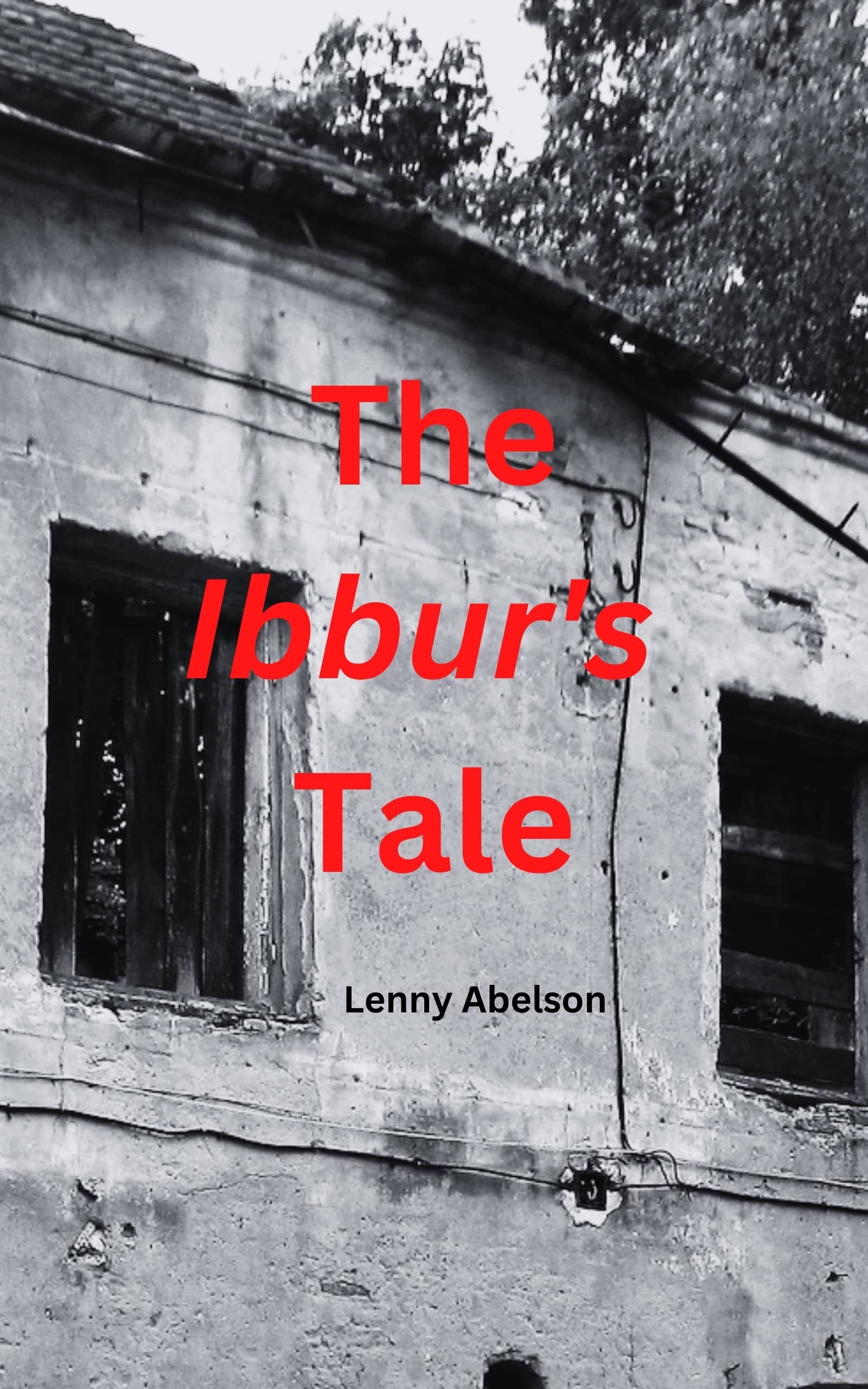
Dear readers, tonight we’re chatting with an English literature professor who encountered a most unusual ghost. Straight out of Eastern European Judaic mythology, it has led him on a journey of discovery and mysteries.
TPS: We were pleased to have the opportunity to speak with Professor Emeritus Benjamin Dinerstein about his experiences with an ibbur and the remarkable history the two of them uncovered. Professor, welcome!
BD: Thank you very much, and please call me Ben. It is a pleasure to meet you.
TPS: Likewise. Well, Ben, it is now more than twenty-two years since your encounter with the ibbur. Have you had any further contact either with her or Zephaniah, the mysterious old woman who played such a prominent role in the narrative?
BD: Sadly, I have not.
TPS: But you are quite certain that you actually encountered an ibbur, in this case, the ghost of your former student, Miriam?
BD: Excuse me. I hate to wax pedantic, but I must make a quick correction. An ibbur is not to be confused with a ghost. It is a very specific type of possessive spirit. Miriam came to me seeking my assistance. She had one last mitzvah, a good deed, to perform, and that was to finish her uncle’s quest. In fairness, she would surely have completed the task herself had she not been killed in the automobile accident. That said, I am absolutely certain that the entity I encountered was indeed Miriam.
TPS: I understand. In fact, I found the story quite convincing myself. Why, there’s so much history — not only her family’s saga, but European history, from before World War One through World War Two…
BD: … and, as you probably realized as quickly as I did, it all “fits.” As implausible as it might seem, these events took place almost exactly as Susanna, whom Miriam had planned to contact, described them.
TPS: I found Susanna absolutely fascinating. What remarkable strength she must have had!
BD: I got to know her quite well over the years, and she was a wonderful woman. She died just a few months ago, though not before she had seen five great-grandchildren.
TPS: But Naomi was her only child?
BD: Yes. It seems that irony ran rampant in that family. Michael Goldberg, Susanna’s husband, had had a bad case of mumps and was apparently unable to have children of his own. Similarly, Zephaniah told me that the man Yosef Müller believed was his father had also been rendered sterile by that disease. However, it seems as though everything fell into place nevertheless, didn’t it?
TPS: Indeed. Now, I must ask you something a little more personal. You have long described yourself as a skeptic, yet you seem so willing to accept an encounter with a purported ibbur without any reservations. Did you step out of character? Did you make an exception because of your feelings toward Miriam, your former student?
BD: Not at all! Like the ancient Greek skeptics, I tend to withhold assent, at least initially. Thereafter, I reserve judgment until I have gathered sufficient information. The image of Miriam convinced me that she was indeed my brilliant student, and the strange family saga that we unfolded was considerably more believable than the appearance of an ibbur. Everything made sense, except —
TPS: Except?
BD: Except for Zephaniah. I have consulted with a number of leading authorities, and no one can explain who or what she was — and is. I am convinced that she is still around, and I have lately come to believe that I shall see her again.
TPS: Did Susanna share any details about her interactions with Zephaniah?
BD: She once said that “the old woman” was in some ways a sort of guardian angel for the family, yet when I pressed her for details, she merely smiled and said that that was something I would have to learn for myself.
TPS: However, you were given considerable information about Zephaniah’s interactions with Yosef and the others. She seemed able to escape death, to vanish and reappear, and to tell the future. Didn’t this part of the narrative challenge your innate skepticism?
BD: You have heard of the “slippery slope”? Well, once I could accept an ibbur in my residence, I was open-minded enough to accept almost anything related to her story. Nevertheless, I must confess that it was not until I actually saw Zephaniah — and watched her disappear with Miriam right in front of my eyes — that I became what they call “a true believer.” There are things we cannot understand, and it seems Zephaniah is one of them.
TPS: Since your encounter with Miriam, have you taught any literature based on the legends of Eastern European Jewry? In particular, have you taught anything more about ibburim?
BD: I had actually taught The Dybbuk, or Between Two Worlds, the masterpiece by Shloyme Zanvl Rappoport, better known as S. Ansky, many years earlier. Some of my syllabi since then have included The Warsaw Anagrams, by Richard Zimler, which involves an ibbur, and The World That We Knew, by Alice Hoffman, which features a dybbuk, and at that, a female dybbuk! Sadly, this great literary tradition is drifting toward obscurity. I can only hope it will not be forgotten altogether.
TPS: Doesn’t the modern world tend to look down on these supernatural legends?
BD: It does, and that’s all the more regrettable. Not only do they offer us a glimpse into the daily lives of Jews living in the shtetlach (small Jewish towns and villages in Eastern Europe), but we can learn so much more when we begin to translate the metaphors. Isn’t this true of other tales as well?
TPS: What do you mean? Which stories?
BD: Well, I shall give you just one example: the golem. That legend, with which Mary Shelley was surely familiar, ultimately gave rise to her Frankenstein. Now, let us indulge in a little free association, shall we? When I say “Frankenstein,” what’s the first thing that comes to mind?
TPS: Why, “Frankenstein monster”!
BD: Precisely! And do we not see “Frankenstein monsters” all over the place right now? Remember, in the novel, Victor Frankenstein wanted to learn the secrets of life and death, presumably (at least in part) for the benefit of mankind. We have so many great “inventions” that may have been designed to help, yet are actually quite capable of turning on us, even as the monster turned on its creator. Consider Artificial Intelligence, for example. AI is surely a remarkable achievement, yet look at its potential for harm. Nuclear technology has directed us toward remarkable accomplishments in medicine, yet do we not also live under the specter of nuclear war? The list goes on. My point is simply that many of the legends involving the golem foretold the potential disasters that such a creature represents. Again, translate the metaphor!
TPS: One can see why Miriam enjoyed your classes so much. But let me return to Zephaniah, the mysterious old woman who casts her spell on the bulk of the family saga. You mentioned that you now expect to see her again.
BD: I do, but I cannot give you any more details. Let me suggest that I simply have a “gut feeling” that she is about to come back into my life.
TPS: I certainly hope so! Will you write about what ensues if she does?
BD: I promise to do so.
TPS: Many readers will anxiously await that story, I assure you. Professor — Ben, thank you so much for this interview.
BD: Thank you for your time, and rest assured that you’ll hear about Zephaniah in near future!
Lenny Abelson, who usually writes under the name of Lenny Cavallaro, is a “Renaissance man” steeped in the classics: Greek tragedy, Shakespearean drama, and classical music. His father, Alfonso Cavallaro, was a composer; his mother, Ann Abelson, was a novelist, and his great-uncle, Jacob Adler (aka B. Kovner) was a noted Yiddish poet and playwright. Abelson (Cavallaro) is additionally a concert pianist and classical composer. He has also boxed, earned a third-degree black belt in karate, run marathons, and practiced hypnosis and reiki professionally.
You can find prof Dinerstein on the pages of The Ibbur’s Tale.
Browse our archives for past interviews, or follow the site by email (bottom-right) to know immediately when your new best-book-friend makes an appearance.


 The Protagonist Speaks
Leave a comment