
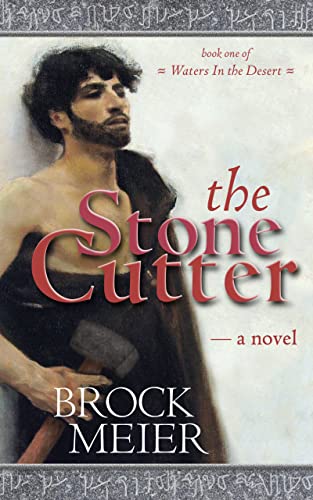
Dear readers, tonight with us is a young sculptor working the art world in the spectacular Nabataean Kingdom of ancient Arabia (you know its capital as the fabulous city of Petra). But his secrets of implication in the
deaths of his sister and mother, and his father’s abandonment, leave a
dark chasm in the flint of his heart.
Tell us a little about where you grew up. What was it like there?
I was born near Hawara, Nabataea—a place the Greeks called Arabia. It was a few days travel south of the capital city of Raqmu, or Petra as you call it. It was one of the last stops on the caravan road from the port at Aila, on the way to the capital, and finally on to the port at Gaza. From Gaza, they shipped luxury goods—incense, silk, and gemstones—to the rest of the world around the Great Western Sea.
Any memories of childhood?
I loved roaming the rocky white hills beyond Hawara, and swimming in the cool waters of the town’s underground cistern—when no one was looking. And I recall times of joy I spent with a girl about my age—Qainu. At the tender age of seven, I thought I might marry her.
But the place holds bitter memories as well, since I was implicated in my younger sister’s death, and later, that of my amma. And for that reason, my abba abandoned me in Raqmu/Petra, leaving me in the care of a stranger. But that man became a better abba than the one who sired me.
What did you first think when your father abandoned you in Petra ?
I couldn’t really imagine that he was abandoning me—in a city I’d never known, and to a man I’d never met. I could not grasp that I would never see my family again. I don’t think my mind, and my heart, could face the terror of that reality.
What do you do now?
I was on the fast-track of the art world in Raqmu, as protege of the famed sculptor Aslah—the man who was my foster abba. He instructed me well, and also said I had a gift like none he’d ever seen. But that all came to a horrendous end one day at the stone quarry. The collapse of a rock wall crushed him to death, and caused grievous injury to my right hand. I not only lost the ability to excel at my craft, but lost the man I cherished as my abba.
I then went on a quest to find something—the Shamir—that I thought might resurrect my career. It was said to be a powerful, but mysterious object, buried beneath centuries of myth. It took me to the very ends of the earth. And the cost of this quest grew far more than I could possibly imagine.
What was the most terrifying thing in your adventures?
I cannot even begin to describe to you the sheer terror of being dispossessed of control over your own body. Being beset by a single demon is one thing, but to have a host of evil spirits fighting for control over you is a matter beyond reckoning. To be evicted from your very self defies description.
Tell us a little about your friends.
I first met that “bear of a man,” Zabibe, when I set foot on the ship that would take us from Nabataea across that vast sea to Muciri in India. On the outside, he was gruff and blustery…even intimidating. But once I got to know him, I found him to be a sensitive, loyal, and thoughtful soul. Maybe even a philosopher.
Any romantic involvement?
This is such a complicated matter. I was rescued by my childhood friend, Qainu, which bound my heart to hers. And then by a strange confluence of events later in life, our hearts again became entwined. But sadly, living our lives together was not to be.
And the young woman Tenicca, who I met in my travels to India, was only to be a business relationship. But on our long voyage to China in the farthest east, we began to treasure each other in a profound way. My own foolish ambition, to be something different than I was, caused me to throw that love away. I cursed myself for making such a choice.
And then there was The Song. A woman so wonderful, in so many ways, that I thought I could never be a part of her life. My attraction to her drove me to madness. But in the end, our lives were destined to meet again.
What’s your favourite drink, colour, and relaxing pastime?
There is nothing quite so refreshing as the cool waters from the springs at Gaia. But the divine wines from the vineyards at Mahoza might be a close second.
My favorite color has to be the range of crimson, rose, and carmine of the bedrock of Raqmu. Once you’ve chiseled away a flake of the weathered outer stone, to see the living swirls of bedrock shining forth, you never forget it.
My most relaxing pastime is, after a day of hard work and sweat, watching the sun descend over the crag to the west of Raqmu. The sky begins to turn from light blue to orange, then dimming to lilac twilight, and finally ending in the deep peace of indigo.
What does the future hold for you?
The last portion of the book about me fairly well tells the rest of my future, so I won’t spoil the ending here. But remember that adventure always lies just around the next bend in the river, and just over the next mountain pass. Every rising of the sun shines not only on a new day, but on the next adventure of our lives.
Can you share a secret with us, which you’ve never told anyone else?
No secrets here. My life is an open book. Literally. Read it!
After a half-century career of scientific research in infrared, lasers, and human vision, award-winning author Brock Meier now devotes himself to finding the incredible, untold stories of little-known people from centuries past. Written, cultural, and material history are the springboard from which he imagines engaging and powerful new stories for today. Come with him on his journeys, as his “Stories Begin Where the History Ends.” When not writing, Brock Meier finds time to make exotic wines and experimental desserts as he listens to jazz, opera, and classical music—all while thinking about where the next story is headed.
You can find Nahor on the pages of The Stone Cutter.
Browse our archives for past interviews, or follow the site by email (bottom-right) to know immediately when your new best-book-friend makes an appearance.


 The Protagonist Speaks
Leave a comment